
Install Window Screens on Metal Frames Without Drilling

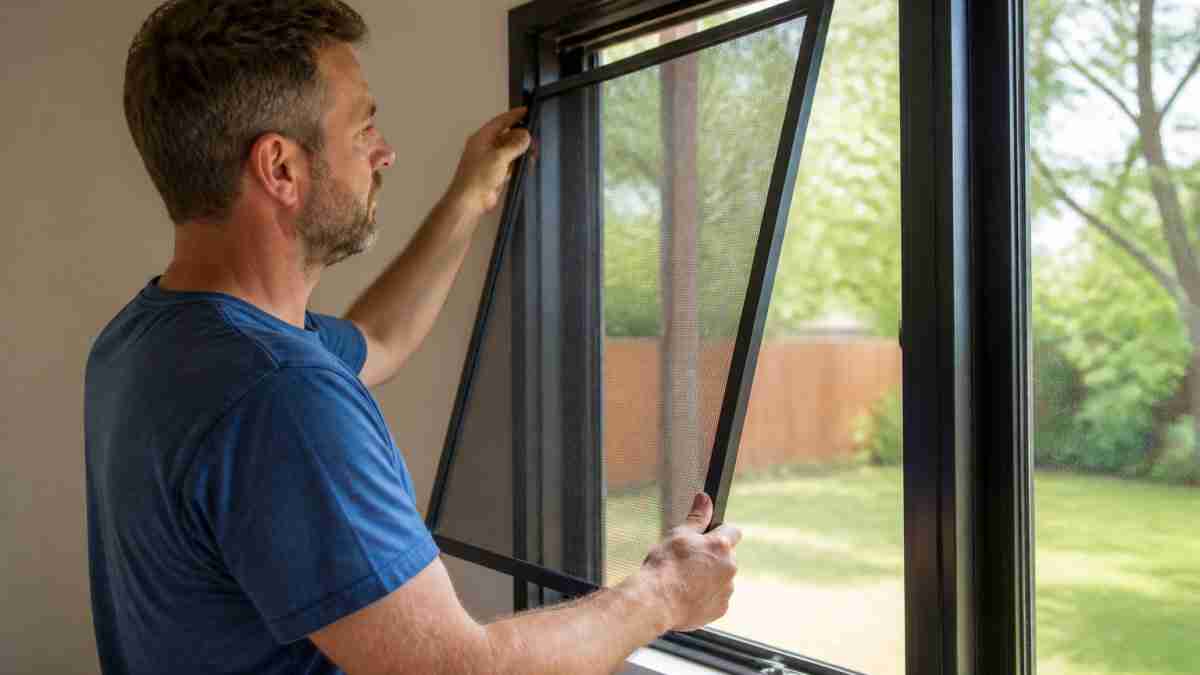
Table of Contents
- Why No-Drill Window Screen Installation Works on Metal Frames
- How to Measure for a Window Screen
- Magnetic Window Screen for Metal Frames: How It Works
- Window Screen Clips for Metal Frames: Types and Installation
- Installing a Window Screen Without Rails: Spring Tension and Pull Tabs
- Step-by-Step: Installing Window Screens on Metal Frames Without Drilling
- Safety Limits: Wind, Pets, and Removable Attachment Options
- Conclusion
- Frequently Asked Questions
Last Updated: October 21, 2026
Why No-Drill Window Screen Installation Works on Metal Frames
You can install metal frame screens without drilling by using clips, magnets, or spring tension. These methods hold the screen using the frame itself, so you never touch a drill.
Metal frames, especially aluminum, have a thin lip or channel that grips hardware well. Drilling into that lip can crack the frame or void its finish.
Below, we’ll show you exactly how each method works, how to measure, and where the limits are.
No-drill installation works because metal frames have a consistent profile. Once you know your frame type, the right hardware choice takes minutes.
How to Measure for a Window Screen
Measure the window opening at three points for width (top, middle, bottom) and three for height (left, center, right).
Here is the measuring process we recommend:
- Measure width at the top, middle, and bottom of the opening.
- Measure height at the left, center, and right.
- Write down the smallest width and smallest height.
- Check whether your window has a screen track or channel. If it does, measure inside the channel.
- Note the frame profile depth so your screen sits flush.
A common mistake is measuring the old screen instead of the opening. Old screens warp, so their dimensions drift. Always measure the opening itself.
For trackless windows, measure the full clear opening. For windows with a channel, measure the channel depth and width so the new frame seats properly.
Window measuring guidance from the University of Illinois Extension
Magnetic Window Screen for Metal Frames: How It Works
A magnetic window screen for metal frames uses a magnetic strip that attaches to the frame and holds the mesh in place.
This method suits homeowners who want fast removal: pull the screen off for cleaning and press it back on.
A few practical notes:
- The magnet strip needs a clean, flat surface to bond well.
- Steel frames hold magnets directly. Aluminum frames usually need a thin steel carrier strip first.
- Keep the strip dry during installation so the adhesive cures fully.
Magnetic screens work best on smaller windows. On large openings, the mesh can sag unless the frame is rigid.
Adhesive-backed magnetic strips fail on dirty or damp frames. Clean and dry the surface completely, or the strip will peel within weeks.
Window Screen Clips for Metal Frames: Types and Installation
Window screen clips for metal frames come in three main families: casement clips, brick clips, and tension clips. Each grips the frame from a different angle and has a different compatibility profile on aluminum, steel, and other metal frames. The table below is the quick version; the notes after it explain what decides whether a clip works on your window.
| Clip Type | How It Holds | Best For | Removal | Metal-Frame Notes |
|---|---|---|---|---|
| Casement clips | Hook over the frame lip | Casement and awning windows | Lift off | Works on aluminum and steel lips at least 1/8 in thick; thin lips bend |
| Brick clips | Grip the window recess | Windows set in brick or masonry | Pull free | Holds the screen against the recess, not the metal frame itself |
| Tension clips | Spring against the frame | Trackless metal frames | Press and release | Needs a consistent channel depth; uneven channels let the screen shift |
Match the clip to the frame profile
Before you buy clips, identify the frame material and the profile shape.
- Aluminum frames are the most common residential metal frame. They usually have a thin lip or a shallow channel. Casement clips work if the lip is at least 1/8 in thick. Thinner lips flex under clip pressure and can crack at the corner welds.
- Steel frames are heavier and hold both clips and magnets directly. Tension clips seat well because the channel edge is rigid.
- Painted or powder-coated frames need clips with a smooth, rounded contact point. Sharp-edged clips can chip the coating, and a chip becomes a corrosion start point on steel.
A quick field test: run a fingernail along the frame lip. If it flexes, it is too thin for casement clips. If rigid, measure the lip depth, anything under 1/8 in is marginal.
Spacing and count
Space clips evenly, about one every 12 to 18 inches along each side, with a clip within 3 inches of every corner. A typical 36 in by 48 in screen takes 8 to 10 clips: three per long side and two per short side, plus corner coverage. Add one clip per side for every 12 inches of extra length on large openings.
Installation steps
- Clean the frame lip and channel with a damp cloth and let it dry completely.
- Test-fit one clip by hand before committing to the full set.
- Hook or press each clip into position, starting at the top corners.
- Work down each side, keeping spacing even.
- Seat the screen into the clips and press until flush.
- Gently pull each side; it should not shift more than about 1/8 in.
If a clip spins or slides, the lip is too thin or the clip is the wrong size. Move up one clip size or switch to tension clips rather than forcing the fit.
Adhesive-backed clip bases and magnetic strips fail on dirty, damp, or cold frames. Most adhesive manufacturers specify application above roughly 50°F and a clean, dry surface. Below that, the bond may not cure and the strip peels within weeks.
Protecting the finish
On painted or powder-coated metal, test any adhesive clip base on a hidden section first: press it on, wait 24 hours, and peel it off. If the coating lifts or discolors, switch to a mechanical clip that hooks the lip instead of bonding to the face. To remove adhesive residue, use a plastic scraper and a little isopropyl alcohol on a cloth, never a metal blade.
When clips are the wrong choice
Clips are a poor fit on very thin aluminum lips, frames with heavy paint buildup in the channel, and openings wider than about 48 in where wind load concentrates at the corners. There, spring tension or a fixed screen is safer.
Installing a Window Screen Without Rails: Spring Tension and Pull Tabs
Installing a window screen without rails relies on spring tension and pull tabs. The screen frame carries spring-loaded pins on two sides.
Pull tabs make removal simple: grip the tab and pull to compress the springs so the screen lifts out.
Steps for a trackless window:
- Check that the opening is clear and the frame edges are clean.
- Compress the spring pins on one side of the screen.
- Tilt the frame into the opening, top edge first.
- Seat the fixed side, then release the spring side.
- Press the frame until the pins click into the channel.
- Test the fit by pressing gently on the mesh.
Spring tension works well for metal frame screens because the channel gives the pins a solid edge to grip.
Step-by-Step: Installing Window Screens on Metal Frames Without Drilling
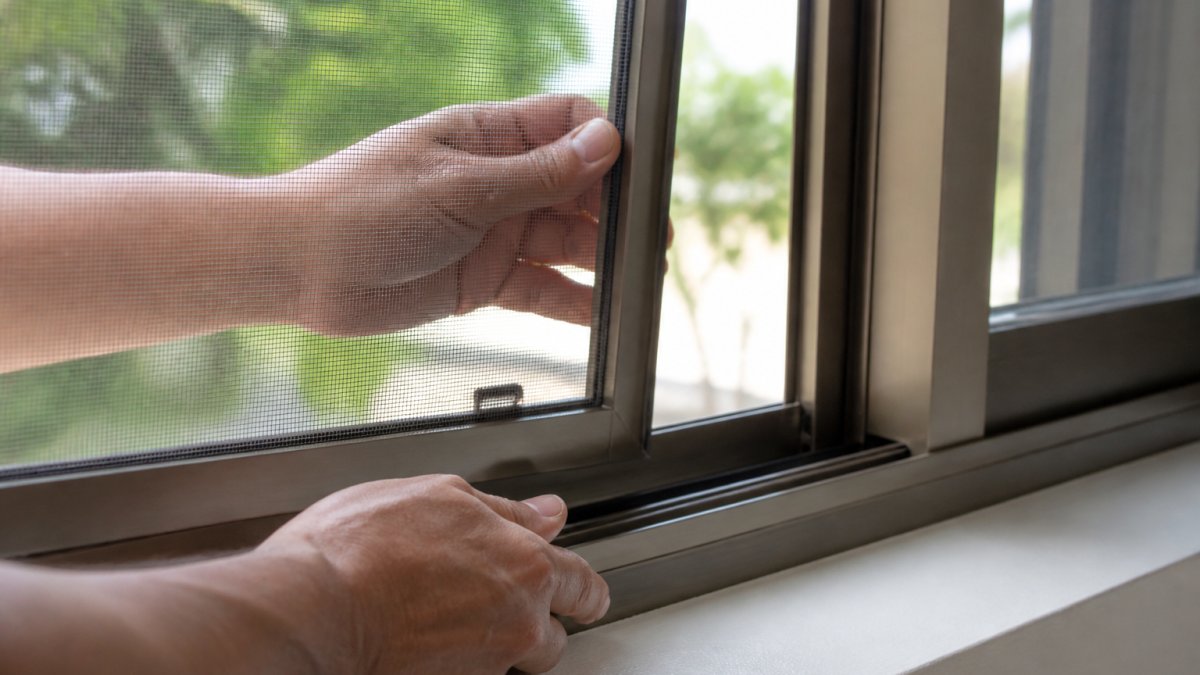
Here is the full process for installing window screens on metal frames without drilling, from measurement to final check.
Total time: 20 to 30 minutes per window
Difficulty: Beginner
What you’ll need:
- Your measured opening dimensions
- The right hardware: clips, magnetic strip, or spring pins
- A clean cloth
Step 2: Clean the frame. Wipe the frame edges and channel. Dry completely.
Step 4: Seat the screen. Align the frame in the opening.
Step 5: Secure the fit. Add clips or press the frame until it sits flush.
Expected result: The screen sits flush, holds firm, and lifts out by hand.
Press the screen in from the top corner first. The frame seats more evenly, and you avoid bending the mesh.
Safety Limits: Wind, Pets, and Removable Attachment Options
No-drill screens are insect and debris barriers, not structural, and not fall protection. The three limits that matter most are wind, pets, and children, and each changes which removable attachment you should choose.
Wind: where no-drill methods stop working
Wind load rises with height and exposure. A clip-held or magnetic screen that is fine on a sheltered first-floor window can lift out of its channel upstairs or on an exposed side. There is no single wind-speed cutoff, because load depends on screen area, attachment count, and how the frame seats. A practical rule most installers follow:
- Sheltered, ground-floor windows: clips or magnets are usually adequate.
- Second floor and above, or exposed sides: use spring tension or a fixed screen.
- Openings wider than about 48 in: add clips at closer spacing or move to spring tension, because wind load concentrates at the corners.
If a screen lifts or rattles in a moderate breeze, that is the signal to change the attachment, not to add more of the same clip.
Pets: attachment matters as much as mesh
A dog or cat leaning on the mesh puts point load on the attachment, not just the fabric. Pet-resistant mesh helps the fabric survive, but a magnetic or lightly clipped screen can still pop loose under a pet’s weight. Spring tension and sturdy clips hold better. For large pets or pets that push at windows, plan on spring tension or a fixed screen, and add clips at the corners where load concentrates.
Child safety: screens are not guards
No-drill screens are not fall protection. They are not designed to resist a child’s weight, and a removable screen can release under pressure. Never rely on one to keep a child from a window. Use window guards or stops that meet current safety standards, and keep climbable furniture away from windows.
Window safety guidance from the Consumer Product Safety Commission
Removable attachment options compared
| Method | Hold strength | Removal speed | Best use | Main limitation |
|---|---|---|---|---|
| Magnets | Lowest | Fastest | Small, sheltered windows; seasonal use | Lifts under wind and pet pressure |
| Clips | Moderate | Fast | Standard windows with a usable lip | Thin lips and wide openings reduce hold |
| Spring tension | Highest of the removable options | Moderate | Trackless metal frames; exposed windows | Needs a consistent channel depth |
When to stop using a no-drill method
Switch to a fixed screen or a different retention method when any of these is true:
- The screen lifts or shifts in a moderate breeze.
- A pet has pushed the screen loose more than once.
- The window is on an upper floor or an exposed side of the house.
No-drill screens are not fall protection and are not a substitute for window guards or window stops. Use them as insect and debris barriers only.
Removal and storage
Removable attachments are only as good as their care. Take screens down before seasonal high winds, clean the frame lip and channel before reinstalling, and store screens flat rather than leaning them against a wall. A warped frame seats poorly and loads every clip or magnet unevenly.
Conclusion
Choosing the right no-drill method comes down to your frame type and how much hold you need. Wind, pets, and window height all change the answer.
At Best Custom Screens, we build fully assembled screens made to your exact dimensions, with heavy-duty all-metal construction and pet-friendly options.
Submit a request for quote and get a screen built to fit your window the first time.
Frequently Asked Questions
How do you attach a window screen to a metal frame without drilling?
You can attach a screen to a metal frame without drilling using three main methods: magnetic strips that hold the screen mesh to the metal surface, spring-loaded clips that press into the window channel, or tension springs with pull tabs that grip the frame from inside. Each method avoids screws and holes, making them rental-friendly and safe for finished metal surfaces. Choose based on your frame type and whether you need the screen to be removable for cleaning or seasonal storage.
Can magnets hold a window screen on a metal window frame?
Magnets can hold a window screen on a metal frame if the frame is ferrous, meaning it contains iron or steel. Aluminum frames are not magnetic, so a magnetic window screen for metal frames will not stick to them without an added steel strip. Test your frame with a refrigerator magnet first. If it sticks, a magnetic screen kit can provide a secure, removable hold that is easy to take down and reattach.
How do you install a window screen when the frame has no rails?
When a window frame has no rails, you can install a screen using tension springs and pull tabs, or with clips that grip the frame profile directly. Spring tension systems push outward against the frame opening to hold the screen in place, while clips attach to the frame edge. Measure the opening carefully and choose a screen sized to compress slightly for a snug fit. This method works well for trackless windows and older frames.
Can you install a window screen from the outside?
Yes, you can install a window screen from the outside, and many no-drill methods are designed for exterior access. Magnetic screens and clip-on screens often press into place from the outside, while spring tension screens may be installed from either side depending on the frame design. Check that the screen is secure before letting go, and test the fit by gently pulling on the frame. Outside installation is common for second-story windows where interior access is limited.