5 Best Security Screen Door Designs for Modern Homes

Last Updated: October 22, 2026
Quick Summary
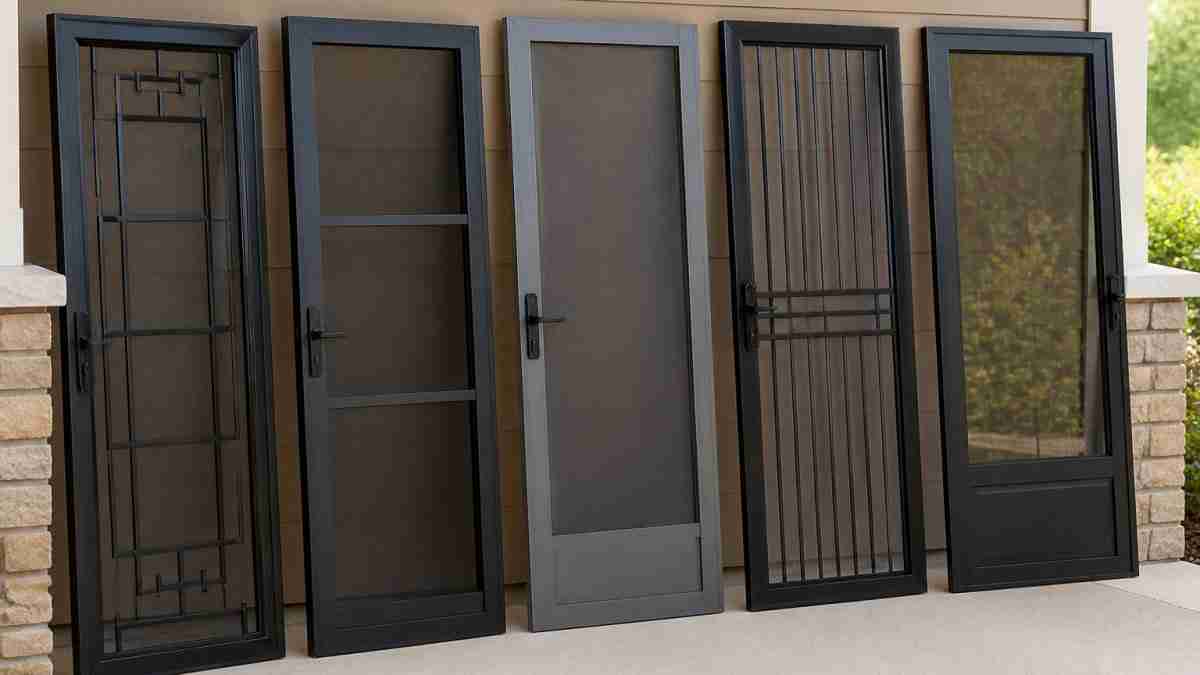
The 5 best security screen door designs for modern homes are full-view mesh, horizontal slat steel, perforated metal sheet, geometric grid, and slim-frame wrought iron. Every design delivers forced-entry resistance, so the real decision is how much visibility and airflow you trade for privacy and decorative style.
- Full-view mesh offers the highest visibility and natural light of the five designs.
- Perforated metal sheet delivers the highest privacy but reduces visibility, airflow, and daylight.
- Slim profiles of roughly 1 to 1.5 inches wide recede against large glass and smooth stucco.
- Measure width and height at three points each and use the smallest figure when ordering.
- A quality security screen door commonly lasts well over a decade with proper installation and routine care.
Table of Contents
- Quick Comparison: 5 Security Screen Door Designs for Modern Homes
- 1. Full-View Mesh: The Minimalist Glass-Like Entry
- Security Screen Door Materials: Steel, Aluminum, Wood, and Composite
- Frequently Asked Questions
Quick Comparison: 5 Security Screen Door Designs for Modern Homes
The right security screen door balances forced-entry resistance with a look that doesn’t fight your home’s architecture. Best Custom Screens builds swinging and sliding screen doors nationwide, and design choice drives satisfaction as much as hardware does. Below are the 5 best security screen door designs for modern homes, with pros, cons, and what each costs in visibility, airflow, and upkeep.
| Design | Best For | Visibility | Privacy | Maintenance |
|---|---|---|---|---|
| Full-view mesh | Bright, minimalist entries | Highest | Low | Low |
| Horizontal slat steel | Clean modern lines | High | Medium | Low |
| Perforated metal sheet | Industrial privacy | Low | Highest | Low |
| Geometric grid | Decorative modern edge | Medium | Medium | Medium |
| Slim-frame wrought iron | Architectural matching | High | Low | Medium |
Every design here delivers forced-entry resistance. The real decision is how much visibility and airflow you’re willing to trade for privacy and decorative style.
1. Full-View Mesh: The Minimalist Glass-Like Entry
Full-view mesh is the closest thing to an invisible security door. A slim metal frame holds a tight, heavy-duty mesh panel, so the entryway reads as an open doorway rather than a barrier.
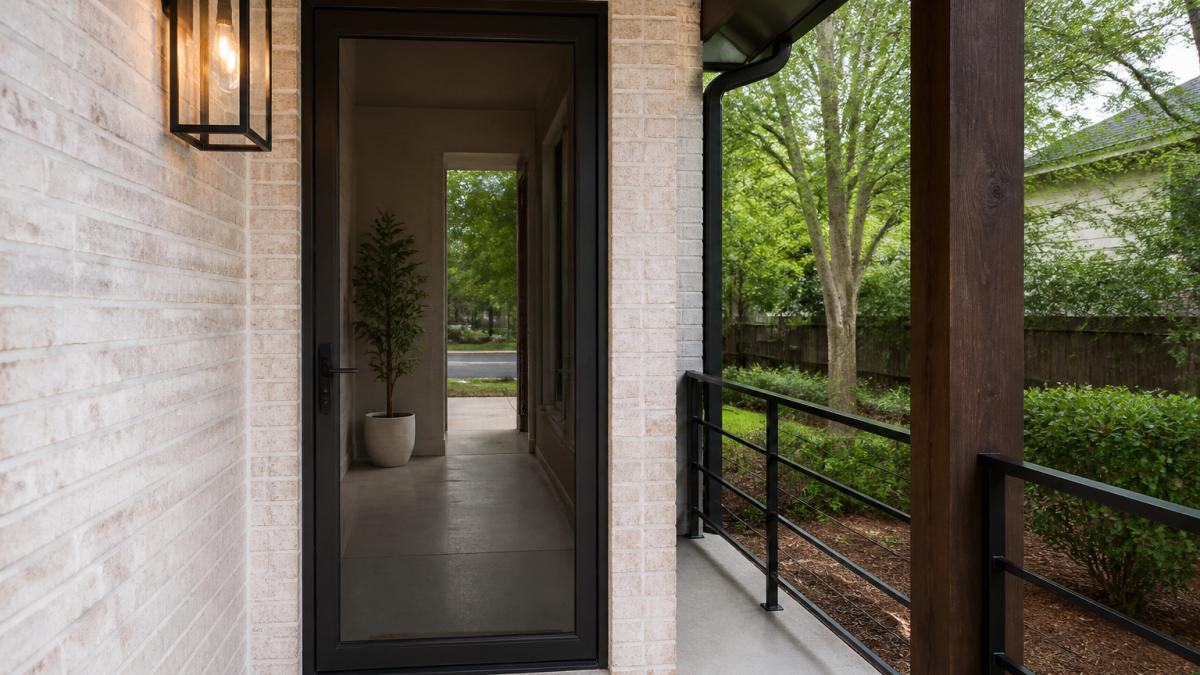
(/security-screen-doors-buyers-guide/) styles should follow your home’s lines, not fight them. Modern stucco or glass-heavy facades pair best with full-view mesh or horizontal slat steel; industrial or loft-style homes suit perforated sheet; traditional bones with updated interiors often land on geometric grid or slim-frame wrought iron. Front-entry and hinged applications are most common, but the same styles work for a security screen door for sliding patio door setups with the right track and frame.
Matching Frame, Finish, and Hardware to Modern Exteriors
Style matching happens at three scales; getting all three right makes a door look original to the house:
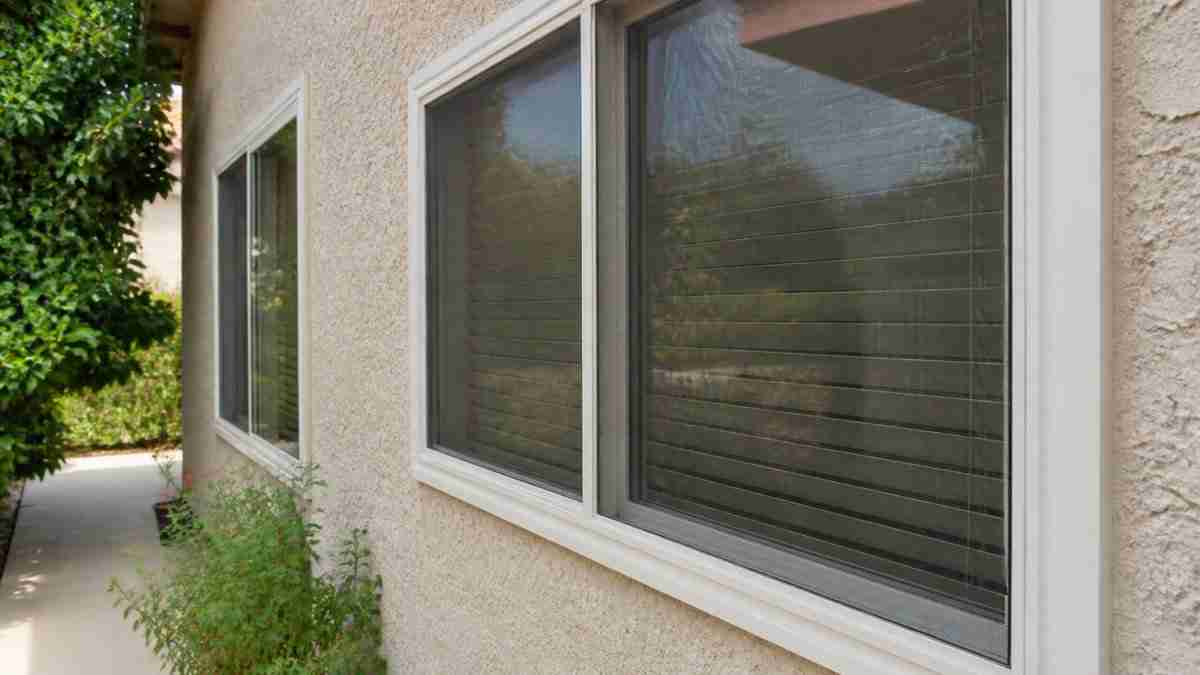
- Frame profile. Slim profiles (roughly 1 to 1.5 inches wide) recede against large glass and smooth stucco; wider profiles read as a design feature and suit homes with heavier trim. Match the profile width to your window frames so the entry reads as one system.
- Finish color. Matte black and dark bronze are the safe modern defaults because they disappear against shadowed interiors. Match the door finish to your exterior light fixtures and house numbers rather than to the siding, which is usually a different sheen.
- Hardware. Lever handles, concealed hinges, and a slim deadbolt keep the modern look. Ornate handles and visible barrel hinges pull the design back toward traditional.
Measuring, Installation, and Fit
Most security screen doors are ordered to the rough opening, so measurement errors are the most common cause of a bad fit:
- Measure the width and height at three points each (top, middle, bottom) and use the smallest figure; openings are rarely perfectly square.
- Confirm the swing direction and which side the hinges land on before ordering; reversing a hinged security door in the field is not a simple swap.
- Hinged doors need a reinforced frame or solid blocking behind the hinges and strike plate. A heavy door on a weak frame fails at the frame, not the door.
Maintenance and Expected Lifespan
Upkeep is modest but not zero, and varies by material:
- Powder-coated steel and iron: inspect for chips and touch them up promptly; a breached coating is where rust starts. Check hinge screws and strike plates annually.
- Aluminum: wash with mild soap and water; inspect rollers or hinges yearly and lubricate moving parts.
- Wood and composite: refinish wood every few years and watch for rot at the base where moisture collects.
With proper installation and routine care, a quality security screen door commonly lasts well over a decade, and many steel and iron doors outlast the finish on the house around them. The finish, not the structure, usually needs attention first.
Accessibility, Pets, and Everyday Use
A door that’s hard to use every day gets propped open, defeating the purpose. Before choosing a design, consider:
- Threshold height. A low threshold is easier for strollers, wheelchairs, and older adults; a raised sill improves weather sealing but adds a trip hazard.
- Handle operation. Lever handles are easier for children and people with limited grip than round knobs.
- Pet-resistant mesh. Standard insect mesh tears under claws; pet-resistant mesh uses a heavier weave and is worth specifying if animals use the door.
Skipping a reinforced door frame undermines any of these designs. A heavy-duty door mounted to a weak frame gives way at the frame, not the door, so budget for proper anchoring.
Security Screen Door Materials: Steel, Aluminum, Wood, and Composite
Security screen door materials decide how much protection and upkeep you’re signing up for. The table below compares the four common options on the factors that matter at the door frame, not the showroom.
| Material | Forced-Entry Resistance | Weight | Corrosion Behavior | Typical Upkeep |
|---|---|---|---|---|
| Steel | Highest; holds shape under impact and resists prying | Heaviest; needs heavy-duty hinges and a reinforced frame | Rusts if finish is breached; powder coating is the common guard | Touch up chips promptly; check hinges annually |
| Aluminum | Moderate; lighter gauge can deform under a pry bar | Lightest; suits large and sliding doors | Naturally corrosion-resistant; ideal for humid climates | Wash and inspect rollers or hinges yearly |
| Wood | Low on its own; security comes from the grille or mesh it carries | Moderate | Swells and warps with moisture unless sealed | Refinish every few years; watch for rot at the base |
| Composite | Moderate; depends on the internal reinforcement | Moderate | Resists moisture and insects better than wood | Low; occasional cleaning and hardware checks |
Steel does the heavy security work: it holds its shape under impact and resists prying far better than lighter aluminum, but needs solid hinges and a reinforced frame.
How to Read Security Ratings Instead of Marketing Terms
“Heavy-duty” and “commercial-grade” are marketing words, not test results. When comparing doors, ask for the test standard behind the claim. The two most common in this category are:
- ANSI/SVIA 902, the North American security screen door standard, which rates a door’s resistance to forced entry through staged physical attacks and assigns a performance grade. A higher grade means the door survived a more aggressive test.
- AAMA/WDMA/CSA 101/I.S.2/A440, the North American fenestration standard for doors and windows, which covers structural performance, water resistance, and air infiltration. It tells you how the door behaves in weather, not just under attack.
A door carrying both a security grade and a fenestration rating gives you two kinds of assurance: it resists a break-in attempt and keeps the weather out. Ask the manufacturer for the label or test report, not brochure language.
Construction Details That Separate Good From Cheap
Whichever material you choose, look for these specifics:
- Welded, not screwed, grille joints. Screwed joints loosen and can be backed out; welded joints hold under prying.
- Full-perimeter frame anchoring. The door is only as strong as its attachment to the rough opening. Anchors at the hinge side and lock side matter most.
- A deadbolt, not just a latch. A solid deadbolt with a reinforced strike plate is the single biggest lock-side upgrade.
Ask how the door is measured and installed before you order. A custom fit to your actual opening prevents the gaps and sticking that ruin both security and curb appeal.
Frequently Asked Questions
What should you look for when buying a security screen door?
Focus on the door frame material and gauge, the locking system and deadbolt, and the mesh or grille construction. Check for reinforced construction and heavy-duty hinges. Forced-entry resistance depends on how the door mounts to the frame, not just the mesh. Ask about independent security ratings and test standards. Also confirm the door is custom-fit to your opening, because a loose fit weakens the lock and frame. Finally, review the finish, such as powder coating, for corrosion resistance and weather resistance.
Do security screen doors block natural light?
It depends on the design. Full-view mesh and slim-frame wrought iron designs let in most daylight while keeping insects out. Perforated metal and dense decorative grilles reduce light and visibility. If daylight matters, choose a mesh with a high open area and a thin frame. For patios, a security screen door for a sliding patio door with full-view mesh preserves the view and airflow. Ask the manufacturer for the open-area percentage if you want a measurable comparison.
What materials are commonly used for security screen door materials?
Steel and aluminum are the most common security screen door materials. Steel offers high forced-entry resistance but needs a powder coating to prevent rust. Aluminum resists corrosion and suits coastal homes, though it is lighter. Heavy-duty all-metal construction is the standard for security. The material you choose affects durability, weight, price, and how well the door matches your home’s exterior.
How do you choose a security screen door for a front or patio entrance?
For a front entrance, prioritize forced-entry resistance, a deadbolt, and a design that matches your home’s style. For a patio, choose a security screen door for a sliding patio door with smooth hardware and a track that handles daily use. Measure the opening precisely for a custom fit. Consider airflow and visibility if the door is the main source of ventilation. Check the warranty and replacement policy. If you have pets, ask about pet-resistant mesh before ordering.
Which security screen door design works best for a modern home?
Full-view mesh and horizontal slat steel are the two designs that most often suit modern homes. Full-view mesh keeps the entry visually open, while horizontal slat steel adds clean lines and strong forced-entry resistance. Perforated metal and geometric grid designs work well on contemporary facades that already use metal accents. Slim-frame wrought iron with a custom finish can match architectural details. The best choice depends on how much light and visibility you want and how exposed the entrance is.
Choosing a security screen door means weighing visibility, privacy, and forced-entry resistance against your home’s style. At Best Custom Screens, we build fully assembled, custom-made swinging and sliding screen doors with heavy-duty, all-metal construction options, shipped nationwide and ready to install. If you want a door that fits your opening exactly and matches your architecture, submit a request for a quote and we’ll help you pick the right design.