How to Level a Sliding Screen Door Frame (2026 Guide)


Table of Contents
- How to Level a Sliding Screen Door Frame: What You Need Before You Start
- Diagnosing a Sliding Screen Door That Drags, Sticks, or Binds
- Frame Alignment vs. Roller Problems: How to Tell the Difference
- How to Measure and Check Your Screen Door Frame for Level and Square
- How to Adjust Sliding Screen Door Rollers to Level the Door
- How to Fix a Sagging Screen Door and Correct Gaps
- Sliding Screen Door Track Cleaning and Maintenance
- How to Measure an Old Screen Door for Replacement
- Frequently Asked Questions
Last Updated: October 19, 2026
How to Level a Sliding Screen Door Frame: What You Need Before You Start
Learning how to level a sliding screen door frame starts with one key fact: most doors that stick are not broken.
A sliding screen door frame is the outer structure that holds the screen mesh and rides on rollers inside the top and bottom tracks.
Below, we’ll show you exactly how to diagnose the problem, measure the frame, and correct it. First, gather your tools.
Tools and Materials Checklist
You need less than you think. Most adjustments take one tool.
- Medium Phillips and flathead screwdrivers
- A 2-foot spirit level
- Tape measure
Skip the hammer. Force bends tracks and cracks frame corners.
Safety and Preparation Tips
The door is heavier than it looks, and the frame is thinner than it feels. Two people should lift it, always.
- Lift from the frame, never the mesh
- Wear gloves to protect against sharp screen edges
- Clear the doorway before you start
Prying a stuck door with a screwdriver bends the bottom track rail. A bent rail makes the door hop and bind, and a replacement track is a much bigger job than the adjustment you started with.
Diagnosing a Sliding Screen Door That Drags, Sticks, or Binds
Start by sliding the door slowly and listening. The sound tells you where the problem lives.
- Scraping at the bottom: the door is sitting too low on the rollers
- Rubbing along the top track: the frame has dropped or tilted
- A grinding feel: grit or hair packed into the roller assembly
Push the door gently up and down. If it moves freely, the rollers are carrying weight correctly. If it barely budges, the door is resting on the track instead of the rollers.
That distinction matters, because it points to two very different repairs.
Frame Alignment vs. Roller Problems: How to Tell the Difference
This is the part most guides get wrong. A dragging door has one of two causes, and the fix for each is different.
Frame misalignment means the door opening itself is out of level or plumb. The wall settled, the header sagged, or the original install was rushed.
Roller problems mean the frame is fine but the wheels are worn, seized, or set at the wrong height.
Here is how to tell them apart in under a minute:
| Symptom | Likely Cause | First Fix |
|---|---|---|
| Door drags evenly along the whole bottom | Rollers set too low | Raise rollers |
| Door rubs at one corner only | Frame out of square | Check diagonals |
| Door jumps or hops | Worn or flat-spotted roller | Replace roller assembly |
| Door sticks in one spot | Debris or dent in track | Clean or straighten track |
| Door drifts open or closed on its own | Frame out of level | Adjust rollers, then check frame |
Test the frame before you touch a roller screw. Turn one roller a half-turn, slide the door, and note the change. If nothing improves, the frame is the problem, not the hardware.
How to Measure and Check Your Screen Door Frame for Level and Square
A screen door frame is level when the bottom track reads true on a spirit level, plumb when the side jambs are vertical, and square when both diagonals measure the same.
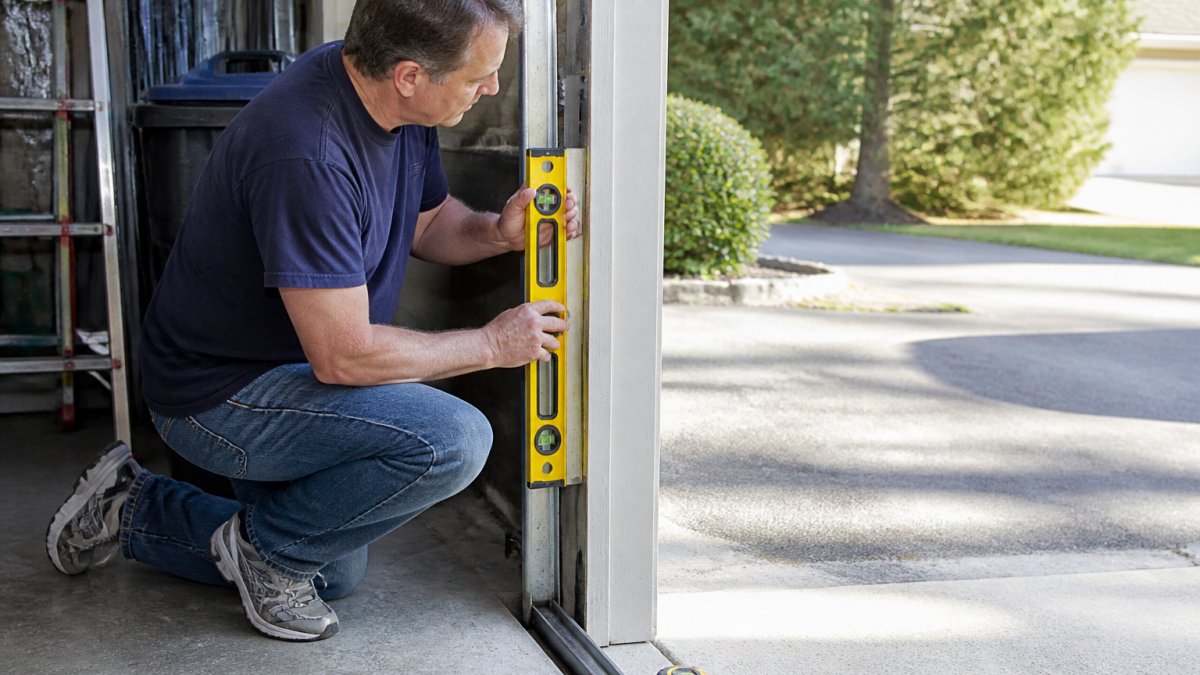
Work through these steps in order and write every number down. You will compare against them after each adjustment.
Step 1: Check level on the bottom track (sill)
Set your 2-foot spirit level along the bottom track, centered between the jambs. Read the bubble at both ends, then flip the level end-for-end and read it again.
A common working tolerance is 1/16 inch of fall across the width of the opening. More than that and the door will drift toward the low side on its own and the rollers on that side will carry more weight and wear faster.
Step 2: Check plumb on both side jambs
Hold the level vertically against the face of each side jamb, first at the top third and then at the bottom third. Note the bubble position at each height. A jamb that reads plumb at the bottom but off at the top means the opening is racked, the header has dropped on one side or the wall has settled unevenly.
Step 3: Check the head (top track) for level
Repeat the level check on the top track. Compare the head reading to the sill reading. If the sill is level but the head falls to one side, the opening is a trapezoid and the door will bind at the top corner on the low side no matter how you set the rollers.
Step 4: Measure the diagonals for square
Hook your tape at the top left corner of the opening and measure to the bottom right. Then measure top right to bottom left. Measure to the same reference point on each corner, the inside face of the track, not the trim, so the numbers are comparable.
- Diagonals within 1/8 inch: the opening is square. Roller adjustment is the right fix.
- Diagonals off by 1/8 to 1/4 inch: the opening is slightly racked. Rollers can usually compensate, but expect uneven roller heights side to side.
- Diagonals off by more than 1/4 inch: the opening is out of square. This is a frame correction job, not a roller job. Go to the frame-correction steps before turning any roller screw.
Step 5: Check track and frame clearance
With the door in place, look at the gap between the top of the door frame and the head track, and between the bottom of the door frame and the sill track. The gap should be roughly even along the full width. A gap that closes at one end and opens at the other confirms a racked opening. Also check that the door frame sits inside the track channels without rubbing the sides, side rub is a sign the opening is too narrow at that height, which is a different correction than a level problem.
Test the frame before you touch a roller screw. Turn one roller a half-turn, slide the door, and note the change. If nothing improves, the frame is the problem, not the hardware.
If the diagonals match but the level shows a tilt, the whole opening has settled evenly and the rollers can usually compensate. If the diagonals do not match, stop adjusting rollers and correct the frame first.
How to Adjust Sliding Screen Door Rollers to Level the Door
Learning how to adjust sliding screen door rollers is the fastest win in this whole process. Most doors have two rollers, one at each bottom corner, and each sits in an adjustment hole on the frame edge.
Follow these steps:
- Lift the door off the track. Have a helper tilt it out, bottom first.
- Find the adjustment hole. It is a small slot or round hole on the bottom or side edge of the frame, near each corner.
- Turn the adjustment screw. Most turn with a Phillips head. Turning clockwise usually raises the door; counterclockwise lowers it.
- Set both rollers evenly. Count your turns so both sides match.
- Reset the door and test. Slide it the full length of the track.
If the door still drags on one side, raise that side’s roller a quarter turn at a time. Small changes add up fast.
Adjust both rollers by the same amount first. Uneven turning is the most common reason a door ends up tilted after a “fix.”
How to Fix a Sagging Screen Door and Correct Gaps
A sagging screen door usually means one of three things: the rollers have flattened under the door’s weight, the frame has dropped at one corner, or the opening itself is racked. The fix depends on which one you have, so diagnose before you adjust.
Start with the rollers, since they carry the load
If raising the rollers closes the gap at the top and the door slides without rubbing, you are done. Set both rollers by the same number of turns, reset the door, and slide it the full length of the track. If the gap closes on one side but not the other, the frame, not the rollers, is holding the door crooked.
Correct a dropped frame corner with shims
If the gap stays after roller adjustment and your diagonal measurements showed the opening is racked, the frame needs to be brought back toward square. The usual method is shimming the low side of the head track or the low jamb, depending on which corner has dropped.
- Identify the low corner. Your level and diagonal numbers tell you which side has fallen.
- Loosen, do not remove, the fasteners holding the track or frame on that side, just enough to let the frame move.
- Insert shims behind the track or frame at the low point. Use thin, rigid shims (composite or hardwood, not soft pine) so they do not crush over time.
- Re-check the diagonals after each shim. Add shim stock in small increments, 1/16 inch at a time, and re-measure. Over-shimming racks the opening the other way.
- Re-tighten the fasteners and re-check level, plumb, and diagonals one final time before resetting the door.
Do not shim against finished interior trim or drywall without protecting it. Shims driven behind trim can crack the trim or pop the paint line. If the frame is trimmed on both sides, loosen the trim fasteners first or work from the unfinished side of the opening.
Prying a stuck door with a screwdriver bends the bottom track rail. A bent rail makes the door hop and bind, and a replacement track is a much bigger job than the adjustment you started with.
Sliding Screen Door Track Cleaning and Maintenance
Sliding screen door track cleaning prevents most of the problems above. Grit, pet hair, and pollen pack into the bottom track and wear the rollers flat.
Run this routine twice a year:
- Vacuum the bottom and top tracks with a crevice tool
- Wipe the track rail with a damp rag and mild cleaner
- Spray a light coat of silicone lubricant on the rollers, not the track
Skip oil-based lubricants. They attract dust, and dust is what started the problem.
Pet hair is the number one cause of roller wear we see. If you have a dog or cat, clean the bottom track monthly and check the roller assembly for wrapped hair.
How to Measure an Old Screen Door for Replacement
Sometimes the frame is beyond adjustment. Knowing how to measure an old screen door for replacement saves you a return and a second wait.
Measure the door itself, not the opening:
- Height: from the top of the frame to the bottom of the frame, at both sides
- Width: across the top, middle, and bottom of the frame
- Record the smallest number for each dimension
Then measure the opening. Compare the two. A door that is more than a quarter inch undersized will rattle and leak air.
If your opening is odd-sized, custom is the safer route. We build fully assembled sliding screen doors to your exact dimensions, with heavy-duty all-metal construction and pet-friendly mesh options.
Frequently Asked Questions
How do you level a sliding screen door frame?
Start by checking the frame with a 4-foot level on the top and bottom tracks, then measure diagonals to confirm square. If the frame is out of level, adjust the rollers first by turning the adjustment screws clockwise to raise or counterclockwise to lower the door. If the frame itself is twisted, shim the bottom track or loosen fasteners and re-square the frame. Test the door after each adjustment. For major misalignment, a professional may be needed.
How can you tell if a sliding screen door frame is out of square?
Measure from the top left corner to the bottom right corner, then from the top right to the bottom left. If the two diagonal measurements differ by more than 1/4 inch, the frame is out of square. You can also check with a framing square at the corners. An out-of-square frame often causes the door to bind or rub unevenly along the track, even after roller adjustments.
Why does my sliding screen door sag or rub against the track?
Sagging usually comes from worn roller assemblies, loose fasteners, or a frame that has shifted out of level. Rollers flatten over time, causing one side to drop. Track debris or bent rails can also make the door rub. Start by cleaning the track and checking roller height. If the door still sags, inspect the frame for square and tighten all corner fasteners. Replacing worn rollers often solves the problem.
How do you adjust a sliding screen door that has a gap?
A gap at the top or side usually means the door is sitting too low or the frame is out of alignment. Turn both roller adjustment screws clockwise to raise the door, then check the gap. If the gap remains, the frame may need shimming or re-squaring. Also check that the screen mesh and frame corners are intact. For persistent gaps, measure the opening carefully and consider a custom-fit replacement.
A door that drags is a small problem with a small fix, as long as you diagnose it before you start turning screws. Check the frame first, adjust the rollers second, and clean the track so it stays fixed. When the frame is cracked or the opening is truly odd-sized, custom is the better answer than another standard door that never quite fits.
Get started with Best Custom Screens and request a quote for a precision-fit sliding screen door built to your measurements.