Heavy Duty Sliding Screen Door Hardware vs Standard

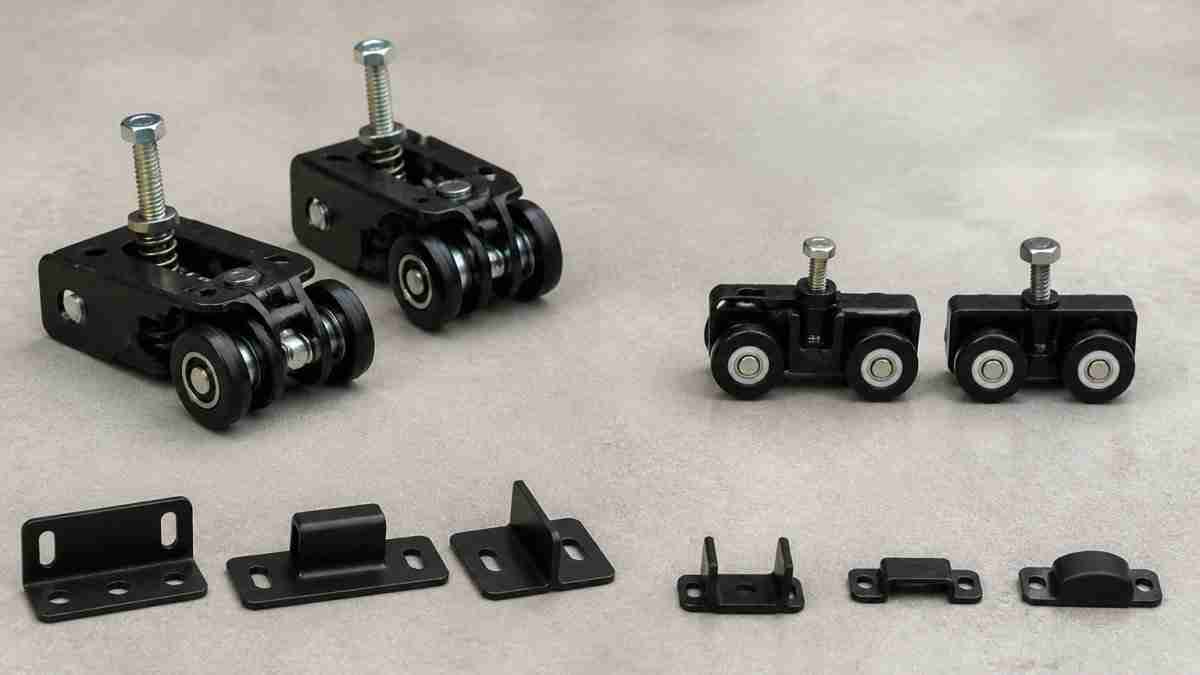
Table of Contents
- Heavy Duty vs Standard Sliding Screen Door Hardware: Quick Comparison
- Sliding Screen Door Rollers: Heavy Duty vs Standard Load Capacity
- Sliding Screen Door Handle Replacement and Multi-Lock Options
- How to Measure a Sliding Screen Door for Correct Hardware Fit
- Sliding Screen Door Track Repair and Heavy-Duty Track Systems
- When to Upgrade: Failure Symptoms and Total Cost of Ownership
- Frequently Asked Questions
Last Updated: October 17, 2026
Heavy Duty vs Standard Sliding Screen Door Hardware: Quick Comparison
Heavy duty sliding screen door hardware vs standard comes down to one thing: how much abuse the door has to survive. Standard hardware uses thinner aluminum, nylon rollers, and a single latch. Heavy duty hardware uses thicker gauge metal, sealed ball-bearing rollers, and a multi-lock system. That difference changes how long the door slides smoothly and how well it resists forced entry.
Here is the short version:
| Feature | Standard Hardware | Heavy Duty Hardware |
|---|---|---|
| Roller material | Nylon or basic steel | Sealed ball-bearing, steel |
| Frame gauge | Thin aluminum | Reinforced all-metal frame |
| Locking | Single latch or hook | Multi-lock system |
| Load capacity | Light, lighter door panels | Heavier panels, pet traffic |
| Track | Thin aluminum rail | Reinforced track system |
| Best for | Low-traffic doorways | Pet owners, security, daily use |
| Lifespan | Shorter replacement cycle | Longer service life |
The practical takeaway: if your screen door gets opened dozens of times a day, or a large dog leans on it, standard hardware wears out fast. Heavy duty hardware costs more up front and lasts longer. For a patio doorway that doubles as your main exit, that trade is usually worth it.
The single biggest difference is not the frame. It is the roller assembly. Cheap rollers flatten under load, and once they flatten, the door drags, the track wears, and the whole system fails early.
Sliding Screen Door Rollers: Heavy Duty vs Standard Load Capacity
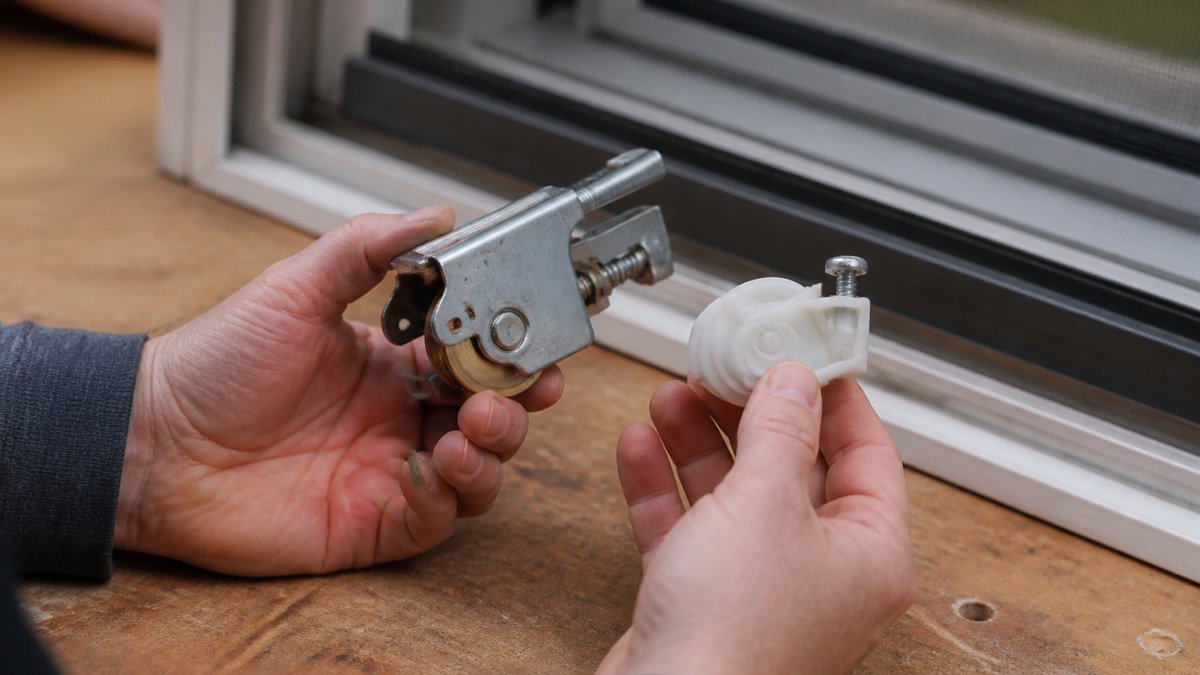
Rollers carry the entire weight of the door, which is why they fail first. Standard sliding screen door rollers typically use nylon wheels on a thin steel axle. They work fine on a light door in a low-traffic doorway. Put a heavier panel or a pet that pushes on the screen, and the nylon flattens, the axle bends, and the door starts to drag.
Heavy duty rollers use sealed ball bearings and a thicker axle. The sealed bearing keeps grit out, which matters in dusty or coastal air. A dragging door is not just annoying. It puts sideways force on the track, and that is where repair costs start adding up.
Most buying guides stop at “nylon versus steel.” That is not enough to compare two products on a shelf. Use these measurable criteria instead:
- Wheel diameter: Standard rollers commonly run about 1 inch; heavy duty assemblies often run 1-1/4 to 1-1/2 inches. A larger wheel rolls over debris and small track imperfections instead of stalling on them.
- Wheel material and bearing type: Nylon wheels ride on a plain axle. Heavy duty rollers use sealed ball bearings, often in a steel or stainless housing. Sealed bearings are the single biggest durability difference because they keep dust, sand, and salt air away from the rolling surface.
- Axle diameter: Standard axles are thin steel, often around 1/8 inch. Heavy duty axles are thicker, commonly 3/16 inch or more, and resist bending when a pet leans on the door or the panel is heavier.
- Housing material: Plastic housings flex and lose alignment. Metal housings hold the wheel square to the track, which keeps the door from climbing out of the channel.
- Adjustment range: Most roller assemblies adjust roughly 1/4 to 1/2 inch in height. Confirm the range before buying, because a door that sags more than the adjustment allows will still drag after installation.
- Mounting pattern: Roller assemblies mount either in the bottom rail or in a side stile, and hole spacing varies. Measure the existing mounting holes and the roller channel width before ordering.
A common mistake is buying the cheapest roller that fits the frame. The roller is the part doing the most work, so it is the last place to cut corners. For a patio door that is the main exit, a sealed ball-bearing roller with a metal housing is the practical minimum. For a light door in a guest room, a standard nylon roller is a reasonable, lower-cost choice.
Compare rollers on four numbers, not adjectives: wheel diameter, axle diameter, bearing type, and adjustment range. If a product listing does not state them, that is a signal about how the hardware was specified.
Sliding Screen Door Handle Replacement and Multi-Lock Options
A sliding screen door handle replacement is straightforward once you match the mounting hole spacing and the door stile width. The bigger decision is whether to stay with a single latch or move to a multi-lock system. A single latch pulls the door tight at one point.
For security, this is the upgrade that matters most. A standard screen door latch is a convenience closure, not a security device. A multi-lock setup turns the screen door into a real barrier while still letting air through.
Before ordering a replacement handle, identify what you actually have. Sliding screen door hardware generally falls into a few families:
- Hook latch: A curved hook on the handle catches a strike on the jamb. Common on older and lighter doors. Simple, but it holds at one point only.
- Mortise-style lock: The latch mechanism sits inside a cutout in the door stile. Replacement requires matching the mortise dimensions, not just the hole spacing.
- Surface-mounted latch: The mechanism mounts on the face of the stile. Easier to replace because there is no internal cutout to match.
- Multi-point or multi-lock system: Latches or bolts engage at the top, bottom, and sometimes the middle of the door. These spread the load across the frame and are the standard upgrade for security and for doors that get heavy daily use.
Handle replacement tips:
- Measure the distance between mounting holes before ordering, center to center.
- Match the handle to your door frame thickness and stile width.
- Check whether your door uses a hook latch, a mortise-style lock, or a surface-mounted latch.
- Confirm the handle works with your inside handle release, and note whether the release is a separate piece or part of the handle assembly.
- Photograph the existing handle next to a ruler, including the strike and any internal cutout.
If you are replacing hardware on an older door, replace the handle and rollers together. Mixing new rollers with a worn latch usually means you are back at the hardware drawer in a few months.
Replacing only the handle on a door with worn rollers is a common mistake. The latch will not line up cleanly, the door will not close flush, and the new handle takes the blame for a roller problem.
::: Proper alignment depends as much on the integrity of the track as it does on the specific extension slide mechanisms that dictate how smoothly the door travels across the frame.
When you compare standard and heavy duty locking hardware, look at how many points engage the frame, what material the latch and strike are made of, and whether the handle assembly includes an inside release. A single hook latch is a convenience closure.
How to Measure a Sliding Screen Door for Correct Hardware Fit
Measuring correctly is the difference between hardware that drops in and hardware that fights you. Here is the process we recommend:
- Measure the width of the door opening at the top, middle, and bottom. Use the smallest number.
- Measure the height at both sides. Use the smallest number.
- Measure the existing door panel itself, not just the opening.
- Note the track depth and the roller channel width.
- Record the frame stile width, since handles and locks are sized to it.
- Photograph your existing hardware next to a ruler before ordering.
Hardware fit depends on more than the door size. Roller channel width, stile width, and track height all affect which roller assembly and handle will work. A door that measures correctly can still reject the wrong hardware if the channel is a different profile.
This is where custom-made doors save time. A fully assembled door built to your dimensions arrives with hardware already matched to the frame. You are not guessing at channel profiles or hole spacing.
Sliding Screen Door Track Repair and Heavy-Duty Track Systems
Sliding screen door track repair usually starts with a symptom: the door jumps, sticks, or will not stay in the channel. The cause is almost always one of three things. The track is bent, the rollers are worn, or debris has packed into the channel. Fix the cause, not the symptom.
For minor damage, a track repair kit with a straightening tool and new track insert can restore smooth operation. For a track that is cracked, crushed, or worn through, replacement is the honest answer. A heavy-duty track system uses thicker aluminum and a reinforced profile, which resists bending when a pet or a person leans on the door.
Track upkeep is simple and easy to skip:
- Vacuum the channel monthly
- Wipe the track with a damp cloth and mild soap
- Avoid abrasive cleaners that scratch the aluminum
- Check roller height adjustment seasonally
A clean track and properly adjusted rollers prevent most of the repairs people pay for.
When to Upgrade: Failure Symptoms and Total Cost of Ownership
Upgrade when repair stops being cheaper than replacement. The clearest signals are rollers that keep flattening, a track that will not stay straight, a frame that flexes when you push it, and a latch that no longer lines up no matter how you adjust it. Each of those points to hardware that is undersized for how the door is actually used.
Total cost of ownership favors heavy duty hardware over time. Standard hardware is cheaper to buy and more expensive to keep. You replace rollers, straighten tracks, and eventually replace the door. Heavy duty hardware costs more once and then mostly needs cleaning and occasional adjustment.
If your door gets heavy daily use or you have a large dog, price heavy duty hardware against two or three replacement cycles of standard hardware. The heavy duty option usually wins on total cost, not just durability.
Our heavy-duty, all-metal construction options and pet-friendly door integration are built for exactly this scenario. If you are unsure whether your doorway needs the upgrade, the failure symptoms above are the honest test.
Frequently Asked Questions
What is the difference between heavy-duty and standard sliding screen door hardware?
Heavy-duty hardware uses thicker metal components, sealed ball-bearing rollers, and reinforced tracks built to handle heavier doors and frequent use. Standard hardware relies on thinner frames, nylon or plastic rollers, and lighter tracks. The practical difference shows up in load capacity, how smoothly the door slides, and how long the parts last before needing repair.
Can I replace standard sliding screen door hardware with heavy-duty hardware?
In many cases yes, but fit matters. Check the roller diameter, track height, and mounting hole spacing on your existing door frame. Heavy-duty rollers are often larger, so the door frame and track must have enough clearance. Measure carefully before ordering, and confirm the replacement parts match your door’s dimensions to avoid return shipping.
Do heavier screen door rollers make the door slide more smoothly?
Heavier rollers with sealed bearings typically slide more smoothly than standard nylon wheels because they reduce friction and resist debris buildup. They also handle heavier doors without sagging. Smooth operation depends on clean tracks and correct alignment, so pair upgraded rollers with regular track maintenance for the best results.
How do I know what size sliding screen door hardware I need?
Measure the door height and width at the frame, then measure the existing roller diameter and track depth. Note the mounting hole spacing on the door stile. For handle replacement, measure the hole spacing and the handle’s backset. Bring these measurements when ordering, or use a custom screen supplier that builds to your exact dimensions.
Does heavy-duty screen door hardware make a screen door more secure?
Heavy-duty hardware improves resistance to forced entry because thicker frames, reinforced tracks, and multi-lock systems are harder to bend or pry. A screen door is still a secondary barrier, not a primary security door. Pair heavy-duty hardware with a quality lock and a reinforced frame for meaningful protection against casual intrusion attempts.
Standard hardware is fine until your doorway asks more of it than it can give. When rollers flatten, tracks bend, and latches stop lining up, you are paying for the same repair repeatedly. Best Custom Screens builds fully assembled, custom-made sliding screen doors with heavy-duty, all-metal construction options, pet-friendly mesh, and hardware matched to your dimensions before it ships. Submit a request for quote and we will help you size the right hardware for your doorway the first time.