5 Best Screen Mesh Types for Humid Coastal Areas


Table of Contents
- Quick Comparison: 5 Best Screen Mesh Types for Coastal Humidity
- How We Ranked These Screen Mesh Types
- 1. Aluminum Screen Mesh: Best Overall for Salt Air and Corrosion
- 2. Fiberglass vs Aluminum Screen Mesh: Which Holds Up Near the Coast?
- 3. No-See-Um Screen Mesh: Best for Fine Insect Control in Humid Air
- 4. Pet-Resistant and Heavy-Duty Mesh: Best for Dogs, Cats, and Security
- 5. Solar and Privacy Mesh: Best for Sun Control and Shade
- Screen Mesh Weave Size Comparison: 18/14 vs 20/20 and What It Means
- Frequently Asked Questions
Last Updated: October 17, 2026
Quick Comparison: 5 Best Screen Mesh Types for Coastal Humidity
Salt air and constant moisture destroy ordinary window screen faster than almost anything else. That is why the 5 best screen mesh types for high humidity coastal areas come down to material chemistry, weave density, and how each one handles corrosion, mold, and airflow over years of exposure.
Here is the short answer before the detail. Aluminum mesh wins for most coastal homes because it resists salt-driven corrosion and holds its shape. Fiberglass is the budget pick, no-see-um handles the finest insects, pet-resistant mesh survives claws, and solar or privacy mesh solves sun and sightline problems.
| Mesh Type | Best For | Salt-Air Resistance | Insect Control | Watch Out For |
|---|---|---|---|---|
| Aluminum | Overall coastal durability | High | Standard | Dents on heavy impact |
| Fiberglass | Budget coverage | Moderate | Standard | Can sag and degrade under UV |
| No-See-Um (20/20) | Tiny biting insects | Varies by build | Very high | Reduced airflow |
| Pet-Resistant | Dogs and cats | High | Standard | Higher cost per panel |
| Solar / Privacy | Sun and shade control | High | Standard | Blocks some breeze and light |
How We Ranked These Screen Mesh Types
We scored each screen mesh on five factors that decide whether it survives a coastal climate: corrosion resistance to salt air, moisture and mildew behavior, airflow, insect exclusion, and how well it works with standard frames and fasteners. Material grade carried the most weight.
A common mistake is choosing mesh by appearance alone. Coastal homeowners need to weigh salt spray, UV exposure, and humidity together, because a product that excels in one area can disappoint in another. The U.S. EPA guidance on coastal environmental conditions offers useful background on how salt and moisture accelerate material breakdown.
Ask for the base metal grade, not just “aluminum.” Marine-grade alloys with a protective coating outlast generic hardware-store mesh in salt air by a wide margin. Most sellers never volunteer this, so request it directly.
1. Aluminum Screen Mesh: Best Overall for Salt Air and Corrosion
Aluminum screen mesh is the top pick for humid coastal homes because the metal resists corrosion and holds tension in damp air.
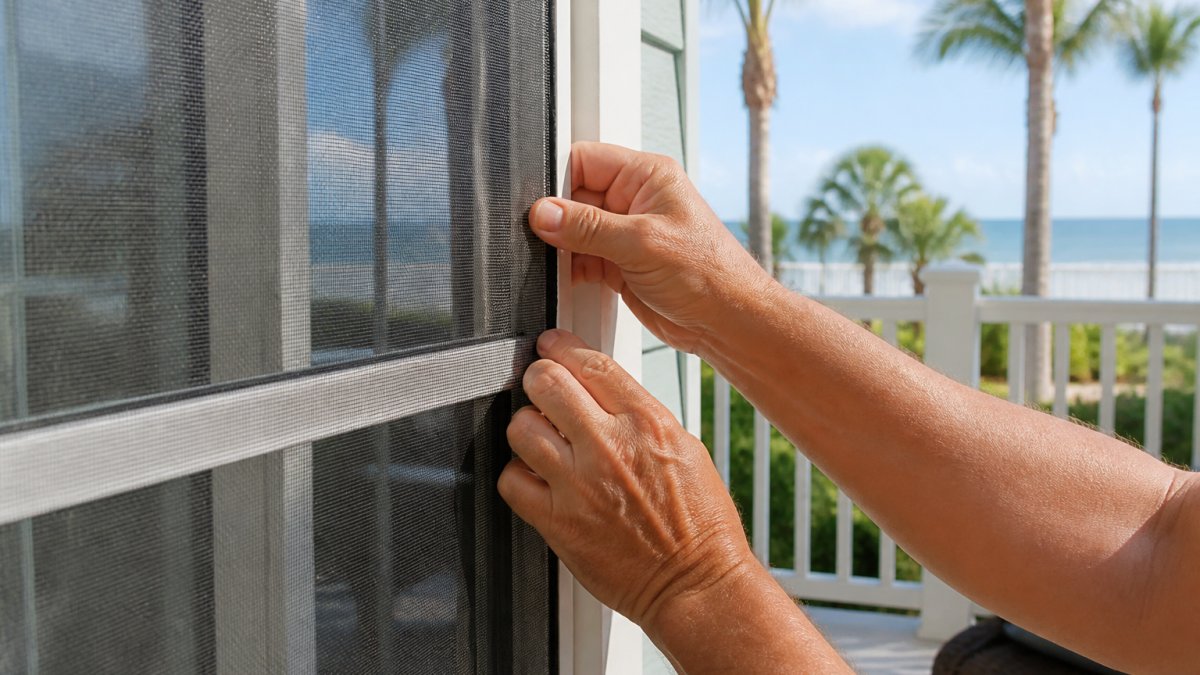
The reason aluminum outperforms in salt air comes down to how the metal behaves at the surface.
Corrosion resistance is not the same as moisture resistance. A mesh can shrug off humidity and still fail at the fasteners.
We recommend aluminum for patios, sliding screen doors, and any opening that takes wind and spray.
Pros and Cons of Aluminum Mesh
Pros:
- Strong corrosion and rust resistance in salt air, especially in marine-grade alloys
- Holds tension; resists sagging in high humidity
- Withstands UV exposure without degrading
- Works with standard powder-coated and PVC frames
- Pairs well with stainless fasteners for a corrosion-matched assembly
Cons:
- Can dent under sharp impact
- Pricier than basic fiberglass
- Heavier, which matters on large retractable screens
- Bare mill-finish mesh pits faster than coated stock in direct spray zones
2. Fiberglass vs Aluminum Screen Mesh: Which Holds Up Near the Coast?
Fiberglass screen mesh is the common budget choice, but aluminum holds up better near the coast.
The mechanism is worth understanding, because it explains the failure pattern homeowners actually see. Fiberglass mesh is a woven glass core wrapped in a vinyl (PVC) coating. The glass core provides strength; the vinyl coating provides weatherability.
That does not make fiberglass useless. If you want the full material breakdown, our U.S. Department of Energy guidance on window and solar control explains how screens affect heat and light.
Mildew, Mold, and Cleaning on Coastal Screens
Mold and mildew are a recurring coastal concern that most screen guides skip. Fiberglass is more prone because its textured vinyl surface holds dust, pollen, and salt film, the organic food source mildew needs. Aluminum resists biological growth better but still collects salt film that dulls the finish and traps grit. A practical routine for either material:
- Monthly: Rinse with a garden hose from the inside out to clear salt film and loose dust. On spray-hit exposures, do this more often.
- Quarterly: Wash with mild dish soap and a soft brush; avoid abrasive pads that scratch coatings and create pitting sites.
- After storms: Rinse promptly, wind-driven salt deposits are heavier than routine spray.
- Mildew spots: A diluted household bleach solution (follow the label) on fiberglass, rinsed thoroughly, clears surface growth; avoid harsh solvents on coated aluminum.
Lifecycle Cost and Replacement Expectations
Purchase price alone misleads on the coast. Fiberglass wins on day-one cost, but its shorter service life under UV and moisture means more frequent replacement, and each replacement carries labor and disposal cost. Aluminum costs more up front and generally lasts longer in salt air, so the cost per year of service often favors it on exposed openings. The honest rule: fiberglass is the value pick for shaded, protected openings; aluminum is the value pick where sun and spray do the damage. Factor in the frame and fasteners too, a cheap mesh on a corroding frame is a false economy.
Pros and Cons of Fiberglass Mesh
Pros:
- Lowest cost of the common mesh types
- Easy to cut and install
- Adequate insect control for standard openings
- Vinyl coating adds some moisture resistance
Cons:
- Can sag and stretch in sustained humidity
- Degrades faster under strong UV exposure
- More prone to surface mildew than metal mesh
- Weaker salt-air performance than aluminum
On exposed coastal openings, aluminum’s longer service life usually beats fiberglass’s lower sticker price on cost per year. Save fiberglass for shaded, protected windows, and rinse either material monthly to keep salt film and mildew in check.
3. No-See-Um Screen Mesh: Best for Fine Insect Control in Humid Air
No-see-um screen mesh uses a tight 20/20 weave to block the tiny biting midges that slip through standard screens. Near waterways, marshes, and preserves, these pests are relentless, and a finer mesh count is the only real defense. The tighter weave trades some airflow and visibility for far better insect exclusion.
We suggest no-see-um mesh for bedrooms, screened porches, and any opening facing water. Expect slightly less breeze and a bit more cleaning, since the fine openings trap dust and salt film. Pair it with a corrosion-resistant frame so the tight weave stays taut.
A 20/20 weave blocks more air, which can make a poorly ventilated porch feel stuffy. If airflow matters most, keep no-see-um on sleeping and living areas and use a more open mesh elsewhere.
Pros and Cons of No-See-Um Mesh
Pros:
- Blocks the smallest biting insects
- Ideal near water, marshes, and preserves
- Fine, consistent 20/20 weave
Cons:
- Reduced airflow and light transmission
- Clogs faster; needs more frequent cleaning
- Can cost more than standard mesh
4. Pet-Resistant and Heavy-Duty Mesh: Best for Dogs, Cats, and Security
Pet-resistant screen mesh is built to survive claws, noses, and the daily push of an excited dog at the door. These heavier-duty products use stronger yarns or reinforced weaves that resist tearing far better than standard fiberglass. For households with pets, they turn a recurring repair into a one-time upgrade.
For security-minded homeowners, heavy-duty all-metal construction adds real peace of mind on ground-floor and patio openings. At Best Custom Screens, we build pet-friendly door integration and heavy-duty metal options into fully assembled screens. The trade-off is cost and slightly reduced airflow on the densest builds.
5. Solar and Privacy Mesh: Best for Sun Control and Shade
Solar screen mesh cuts glare, blocks UV exposure, and reduces solar heat gain on sun-blasted coastal exposures. Privacy mesh takes the same idea further, tightening the weave so outsiders cannot see in while you keep the view out.
The catch is airflow and visibility. Denser solar and privacy weaves dim the view and slow the breeze, so they suit windows and doors more than full porches.
Screen Mesh Weave Size Comparison: 18/14 vs 20/20 and What It Means
Screen mesh weave size tells you how many openings fit per inch, and it decides the balance between airflow and insect control. The numbers run as mesh count: 18/14 means 18 strands one way and 14 the other, while 20/20 means 20 strands both ways. Higher counts mean finer openings and smaller gaps.
Here is the practical difference:
- 18/14 mesh: More open, better airflow, blocks standard insects. Good for general coastal windows.
- 20/20 mesh: Tighter, blocks no-see-ums and fine pests, but cuts airflow and light slightly.
- Opening size: Smaller openings mean better insect barrier and more frequent cleaning.
For most coastal homes, 18/14 handles everyday insects while 20/20 earns its place near water. Match the mesh count to the pest pressure and how much breeze you want.
Match mesh count to the job: 18/14 for airflow and standard insects, 20/20 for no-see-ums and fine pests. The right screen mesh is the one that fits your climate and your insects, not the finest weave on the shelf.
To keep any coastal screen working, rinse salt film monthly, clear dust from tight weaves, and check frames for corrosion. That simple maintenance routine extends the life of every mesh type on this list. When you are ready for screens built to handle salt air and humidity, Best Custom Screens ships fully assembled, custom-made screens nationwide, with heavy-duty metal options and pet-friendly doors that install without special tools. Submit a request for a quote and get screens measured to your exact openings.
Frequently Asked Questions
Which screen mesh resists salt air and corrosion best?
Aluminum screen mesh is the strongest choice for salt air among common residential options. The metal holds up better than standard fiberglass in coastal and high-humidity conditions, and it resists corrosion rather than absorbing moisture the way fiberglass strands can. If you live within a few miles of the water and want a screen that stays tight and clear for years, aluminum is the safer bet. Pair it with a powder-coated frame to protect the edges where salt spray collects.
What is the difference between 18/14 and 20/20 screen mesh?
The numbers describe mesh count: strands per inch in each direction. An 18/14 mesh has 18 strands one way and 14 the other, making it a standard insect screen with good airflow. A 20/20 mesh is tighter and finer, which blocks smaller insects like no-see-ums but cuts airflow and visibility slightly. Standard 18/14 fiberglass is the common choice for general use, while 20/20 no-see-um mesh suits areas near waterways and preserves where tiny biting insects are a real problem.
Is fiberglass or aluminum screen mesh better near the coast?
Aluminum generally wins near the coast because it resists corrosion in salt air and high humidity better than fiberglass. Fiberglass is cheaper and easier to find, but its strands can degrade faster when exposed to constant moisture and salt. That said, fiberglass still works fine for inland homes or covered porches with limited direct exposure. If your windows face the water and take direct spray, aluminum or a heavy-duty metal mesh will last longer and need fewer replacements.
What screen mesh is best for keeping no-see-ums out?
A 20×20 no-see-um screen mesh is the standard pick. The tighter weave blocks the tiny biting midges that slip through standard 18/14 mesh, which matters most near waterways, marshes, and preserves. The trade-off is reduced airflow and slightly lower visibility, so it works best on windows and doors you open for ventilation rather than every opening in the house. Combine it with a well-sealed frame to close gaps where insects sneak around the edges.
How often should coastal window screens be replaced?
Most coastal screens last several years, but salt air, UV exposure, and humidity shorten their life compared with inland homes. Inspect screens each spring for sagging, pinholes, corrosion at the frame, and mildew along the edges. Replace any screen with visible rust, loose weave, or persistent mold that cleaning won’t remove. Choosing a corrosion-resistant mesh like aluminum and rinsing it a few times a year with fresh water will stretch the replacement interval noticeably.
Coastal humidity is unforgiving, and the wrong mesh will cost you a replacement within a season or two. Best Custom Screens builds fully assembled, custom-sized screens with heavy-duty all-metal construction and pet-friendly door integration, so you get durability that matches your climate. Submit a request for a quote and let us match the right mesh to your openings.