7 Ways to Fix a Sliding Screen Door That Sticks

Table of Contents
- 7 Ways to Fix a Sliding Screen Door That Sticks
- How to Clean Sliding Screen Door Tracks
- Sliding Screen Door Roller Adjustment
- Sliding Screen Door Roller Replacement
- Choosing the Best Lubricant for Sliding Screen Door Track
- Fixing Alignment and Frame Damage on a Sliding Screen Door
- When to Repair vs. Replace Your Sliding Screen Door
- Frequently Asked Questions
Last Updated: October 14, 2026
7 Ways to Fix a Sliding Screen Door That Sticks
A sticking sliding screen door is almost always a track, roller, or alignment problem, and most cases clear up with cleaning, a small roller adjustment, or fresh lubrication. The seven fixes in this guide cover every common cause, from grit in the track to a bent frame. At Best Custom Screens, we build and ship custom sliding screen doors nationwide. Below, we’ll show you exactly how to diagnose and fix each one, in the order we’d tackle them ourselves.
Most people start by forcing the door. That’s the mistake. Forcing a stuck door panel bends rollers and widens track damage, turning a five-minute fix into a replacement job. The right approach is to find the cause first, then fix it.
Here’s the diagnostic order that works:
- Clean the track
- Inspect the track for damage
- Check the rollers for wear
- Adjust roller height
- Lubricate the moving parts
- Check alignment and frame condition
- Remove the panel only if the first six steps don’t solve it
Work through them in order. Each step tells you whether you need the next one.
Before you touch anything, slide the door slowly and listen. A grinding sound points to track debris. A scraping sound at the top points to roller height. A thud or jump points to a worn roller. The sound tells you which fix to try first.
How to Clean Sliding Screen Door Tracks
Cleaning the track is the first fix because dirt, dust, and grit cause more sticking doors than any worn part. Debris beneath the panel adds friction, and the door drags against it with every pass. Start with a vacuum and a brush attachment to pull out loose dirt. Then run a stiff brush along the full length of the track, corner to corner. Wipe the channel with a damp cloth and let it dry completely before you test the door. If the door slides freely after this, you’re done.
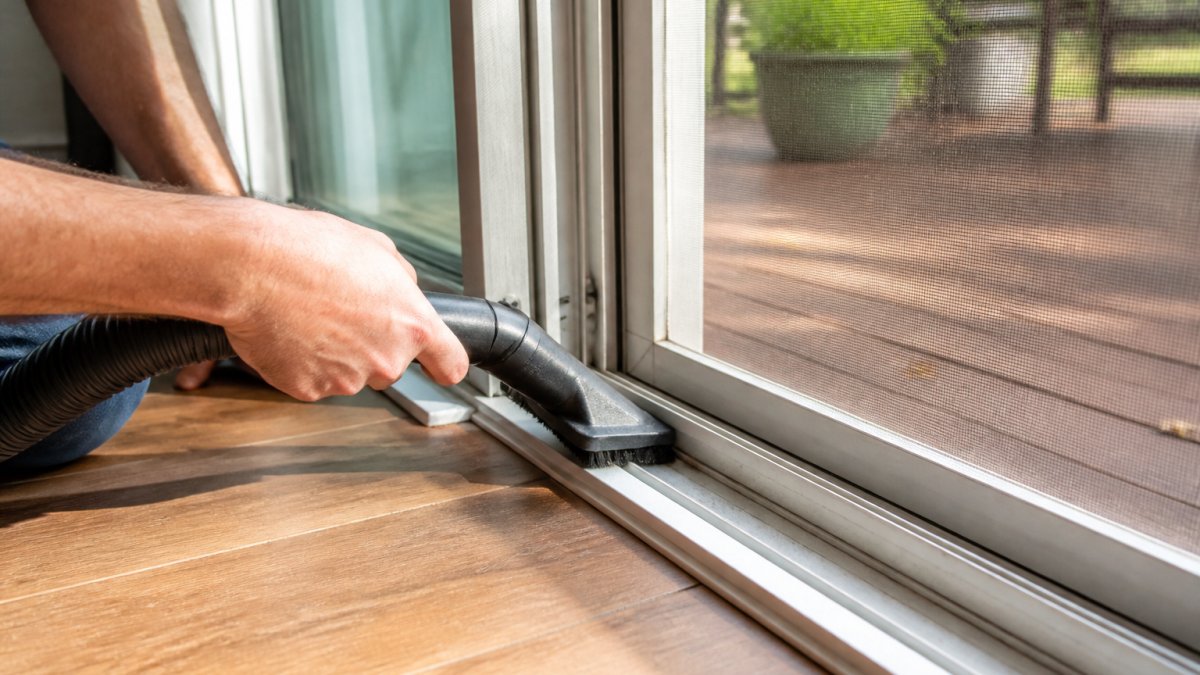
A few habits keep the track clean longer:
- Vacuum the track monthly during pollen season
- Never hose the track down; trapped water rusts steel rollers
- Check the top track too, not just the bottom
- Clear leaves and grit after storms
Sliding Screen Door Roller Adjustment
Roller adjustment is the fix when the door drags along the bottom or scrapes the top of the frame. Each roller sits in an adjustment screw, usually reachable through a small slot on the edge of the door panel. Turn the screw to raise or lower the panel. Raise it if the door scrapes the track; lower it if the door lifts out of the track too easily. Make a quarter turn at a time and test the door after each one. Small changes add up fast, and over-turning is how people strip the screw.
Don’t turn the adjustment screw more than a full rotation in one sitting. On older doors, the housing cracks, and a cracked housing means a full roller replacement instead of a two-minute adjustment.
Sliding Screen Door Roller Replacement
Worn rollers are the culprit when adjustment no longer helps. A worn roller has a flat spot, wobbles in its housing, or won’t spin at all. Before you buy anything, identify what you have, because screen-door rollers are not universal.
Know your roller type first. Sliding screen doors use two basic designs:
- Adjustable rollers sit in a slotted housing with a screw you turn to raise or lower the panel. The screw is usually reachable through a small slot on the edge or face of the door stile.
- Fixed rollers are riveted or screwed into a set position. There is no adjustment screw. If the door drags with fixed rollers, the fix is a new roller, a shim, or a new track, not a turn of a screw.
Rollers also differ by wheel diameter, housing width, and mounting style (top-hung versus bottom-rolling). Pull the old roller and match it by these dimensions, not by brand. A roller that is a fraction too tall or too wide will bind, and one that is too short lets the panel drop out of the top track.
Safe removal and reinstallation. This is where most DIYers damage the door:
- Slide the panel to the center of the opening.
- Lift the panel straight up into the top track until the bottom rollers clear the bottom track. On most screen doors you need only about 1/2 inch of lift.
- Tilt the bottom edge toward you and lower the panel out.
- Set it flat on a padded surface, a moving blanket or cardboard, so the frame and mesh don’t bend or crease.
- Pop out the old roller, seat the new one in the same position, and spin it by hand to confirm it turns freely.
- Reverse the steps to reinstall: top track first, then lower the bottom rollers into the bottom track.
Never pry a screen panel out with a screwdriver or force it past the frame. Screen-door frames are thin aluminum or vinyl, and they bend permanently. If the panel won’t lift free, the top rollers are adjusted too high, lower them a quarter turn and try again.
Match the wear. If one roller is worn, check all of them; they wear at the same rate. Replacing one roller on a door with three worn ones just moves the sticking point. Replace the full set, and keep the old ones as spares if they still spin. Smooth operation depends on consistent maintenance across all moving parts, much like the steps required to quiet a noisy garage door.
| Symptom | Likely Cause | Fix |
|---|---|---|
| Grinding sound | Track debris | Clean the track |
| Scraping at top | Roller height | Adjust roller screw |
| Door jumps or thuds | Flat-spotted roller | Replace the roller |
| Door rubs the frame | Alignment or frame distortion | Check alignment |
| Door won’t budge | Damaged track or bent frame | Repair or replace |
Choosing the Best Lubricant for Sliding Screen Door Track
Silicone lubricant is the right choice for a sliding screen door track. It dries without collecting dust, and it won’t stain the screen mesh or the door frame. Spray a light coat along the track and work the door back and forth a few times to spread it. Wipe away any excess. Avoid oil-based products and grease; they feel smooth at first, then trap grit and make the sticking worse within weeks. A dry silicone spray every few months keeps the door gliding and costs far less than replacing hardware. The U.S. Department of Energy guidance on home maintenance makes the same point about keeping moving parts clean and dry to avoid buildup.
Fixing Alignment and Frame Damage on a Sliding Screen Door
Alignment problems show up as a door that rubs on one side, won’t latch, or drifts out of the track. Screen doors are lighter and more flexible than sliding glass doors, so they go out of square more easily, and the fix is different.
Check the frame for square first. Measure the opening diagonally, corner to corner, in both directions. On a square opening the two measurements match. A difference of more than about 1/4 inch means the opening itself is racked, and no roller adjustment will fix that. Next, sight down the door panel’s frame edges. A bowed or twisted panel frame pushes the door out of square against the track.
Check the guides. Screen doors ride on small guides, top and bottom, that keep the panel centered in the track. A bent guide lets the door wander and rub; a missing guide lets it jump the track entirely. Straighten a mildly bent guide with pliers, or replace it. Guides are inexpensive and are the most common alignment culprit on screen doors specifically.
Check the track attachment. A track that has pulled away from the sill or header throws the whole door out of line. Press the track back against the frame and tighten the screws. If the screw holes are stripped, move up one size in screw diameter rather than filling the hole.
Check the mesh and spline. A sagging or torn screen mesh doesn’t usually cause sticking, but a spline that has popped out of its channel can bulge and rub. Press the spline back into the frame channel with a spline roller; if the channel is cracked, that section of frame needs replacement.
Screen-door-specific hardware matters here. A heavy-duty guide and a reinforced frame hold alignment far better than thin stock parts. If your door uses flimsy stamped guides, upgrading them is often cheaper than replacing the door.
When alignment can’t be fixed. Frame distortion is the point where repair stops making sense. If the panel frame is bent, twisted, or rusted through, or the opening itself is racked, replacement is the smarter spend. A door that sticks because of a bad frame will keep sticking no matter how many new rollers you install.
If your frame is sound but the door still rubs, check that the track is screwed tight to the sill before you adjust anything else.
When to Repair vs. Replace Your Sliding Screen Door
Replace the door when the frame is distorted, the track is badly damaged, or you’ve replaced rollers twice in a few years. Repair makes sense for everything else: a dirty track, a worn roller, a loose guide, or a door that just needs lubrication. The deciding factor is the frame. If the frame is straight and the track is intact, repair it. If the frame is bent, twisted, or rusted through, replacement is the smarter spend. A door that sticks because of a bad frame will keep sticking no matter how many new rollers you install.
The frame decides repair versus replacement. Straight frame, fix it. Bent frame, replace it.
For homeowners who want to skip the cycle of patching an old door, we build fully assembled custom sliding screen doors made to your exact dimensions. They ship ready to install, with heavy-duty, all-metal construction options and pet-friendly mesh integration. Every door is custom-made to specific dimensions, so it fits your opening the first time. You can review general door safety and installation guidance from the U.S. Consumer Product Safety Commission before you start any panel work.
A sticking sliding screen door is a small problem that turns into a big one if you force it. Work through the seven fixes in order: clean, inspect, check rollers, adjust, lubricate, check alignment, then remove the panel. Most doors need only the first three. When the frame itself is the problem, Best Custom Screens builds a replacement that fits your opening exactly, ships fully assembled, and installs without special tools. Our custom-made doors come with durable packaging and heavy-duty options built to last. Submit a Request for Quote and get a door that slides the way it should.
Frequently Asked Questions
How do I fix a sliding screen door that sticks?
Start by cleaning the track with a vacuum and brush to remove dirt, grit, and debris. If it still drags, check the rollers for wear and adjust the roller height using the adjustment screw. Lubricate the track with a silicone-based spray. If the track is damaged or the frame is bent, repair or replace those parts. Most sticking screen doors need just one or two of these fixes.
How do I know if my sliding screen door rollers are worn out?
Rollers are worn when the door wobbles, drags, or makes a grinding noise as it moves. Inspect each roller for flat spots, cracks, or missing ball bearings. If the wheel does not spin freely or the outer edge is worn down, replacement is the fix. Rollers are inexpensive and usually snap or screw into the door frame, so swapping them takes about 15 minutes.
Can I lubricate a sliding screen door track?
Yes, but use the right product. A silicone-based lubricant for sliding screen door tracks works best because it dries without collecting dust. Avoid oil-based sprays and grease, which attract dirt and make the sticking worse over time. Spray a thin coat along the track, then slide the door back and forth a few times to distribute it evenly.
When should I replace a sliding screen door instead of repairing it?
Replace the door when the frame is bent or corroded, the track is cracked beyond repair, or the mesh has multiple large tears. If the door is over 15 years old and you have already replaced rollers twice, a new custom screen door is the better investment. A precision-fit replacement from Best Custom Screens arrives fully assembled and installs without special tools.