
How to Train Dogs to Use Sliding Screen Doors

Last Updated: October 23, 2026
Quick Summary
How to train dogs to use sliding screen doors involves introducing your dog to the open doorway for 3-4 days, teaching them to push through a slightly open screen with treats and praise, and gradually reducing your assistance over 2-4 weeks. Most dogs learn this skill with consistent 10-15 minute daily sessions and patience throughout each training stage.
- Start training when your dog is calm, such as early morning or after a walk, for 10-15 minutes per day
- Spend 3-4 days with the door fully open before introducing the screen to build comfort with the doorway
- Use pet-resistant mesh instead of standard mesh to prevent accidental tears during training
- Teach a wait command at the threshold to prevent bolting and give you control over outdoor access
- Training typically takes 2-4 weeks depending on your dog’s age, size, and confidence level
Table of Contents
- How to Train Dogs to Use Sliding Screen Doors: A Step-by-Step Approach
- Stage 1: Introduce Your Dog to the Screen Door Opening
- Stage 2: Teach Your Dog to Approach and Push Through
- How to Dog Proof a Sliding Screen Door and Prevent Damage
- Teach Your Dog to Wait at the Door Before Passing Through
- Stop Dog from Scratching Screen Door: Training and Prevention
- How to Train a Dog to Use a Doggie Door as an Alternative
- Common Mistakes to Avoid When Training
- Frequently Asked Questions
How to Train Dogs to Use Sliding Screen Doors: A Step-by-Step Approach
Learning how to train dogs to use sliding screen doors independently takes patience, but it gives your pet freedom while keeping pests out. This guide walks you through each stage, from introducing your dog to the doorway to preventing damage.
Why sliding screen doors matter for pet owners
A sliding screen door gives your dog outdoor access without a traditional doggie door installation, maintaining a barrier against bugs and pests.
Many dogs initially treat the screen as a solid wall, barking, pawing, or ignoring it. With the right approach, most learn to push through confidently within a few weeks.
Start training when your dog is calm and focused, not when they’re excited or anxious. Early morning or after a walk works best because your dog will have less pent-up energy.
What you’ll need before you start
Gather these items before beginning training sessions:
- High-value treats your dog loves (small pieces work best)
- A collar or harness for gentle guidance
- A sliding screen door that’s easy to open and close
If your current sliding screen door has a standard mesh, consider upgrading to pet-resistant mesh before you start. This prevents your dog from accidentally tearing through during early training attempts.
Stage 1: Introduce Your Dog to the Screen Door Opening
The first stage focuses on getting your dog comfortable with the doorway itself. Your dog needs to see the screen door as a normal part of your home, not something to fear or avoid.
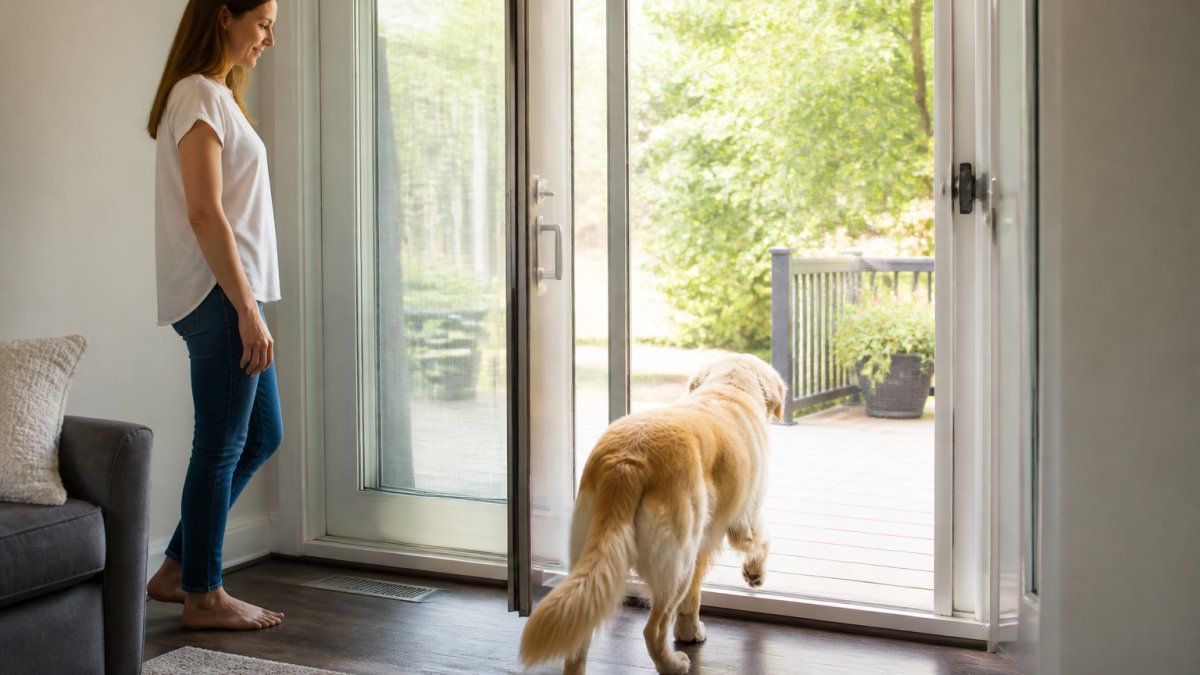
Getting your dog comfortable with the doorway
Prop the sliding screen door fully open for 15-20 minutes during the first few sessions while you and your dog spend time near it.
Walk back and forth through the open doorway yourself; your dog will naturally follow.
Repeat for 3-4 days before moving on, making the doorway feel like a normal passage.
Your dog should view the open doorway as just another part of the house. This foundation makes all the following steps easier.
Using treats and praise to build confidence
Once your dog walks through the open doorway comfortably, hold a treat on the other side and call your dog through, praising enthusiastically when they pass.
Gradually move the treat closer to the mesh so your dog focuses on the screen, letting them sniff and investigate without forced contact.
Common mistakes at this stage:
- Pushing your dog through the doorway (causes fear)
- Using the doorway only when your dog needs to go outside (creates confusion)
- Skipping this introduction phase and moving too fast
Stage 2: Teach Your Dog to Approach and Push Through
Once your dog is comfortable with the open doorway, it’s time to introduce the actual screen. This stage teaches your dog to push through the mesh flap.
Holding the flap or screen open during early attempts
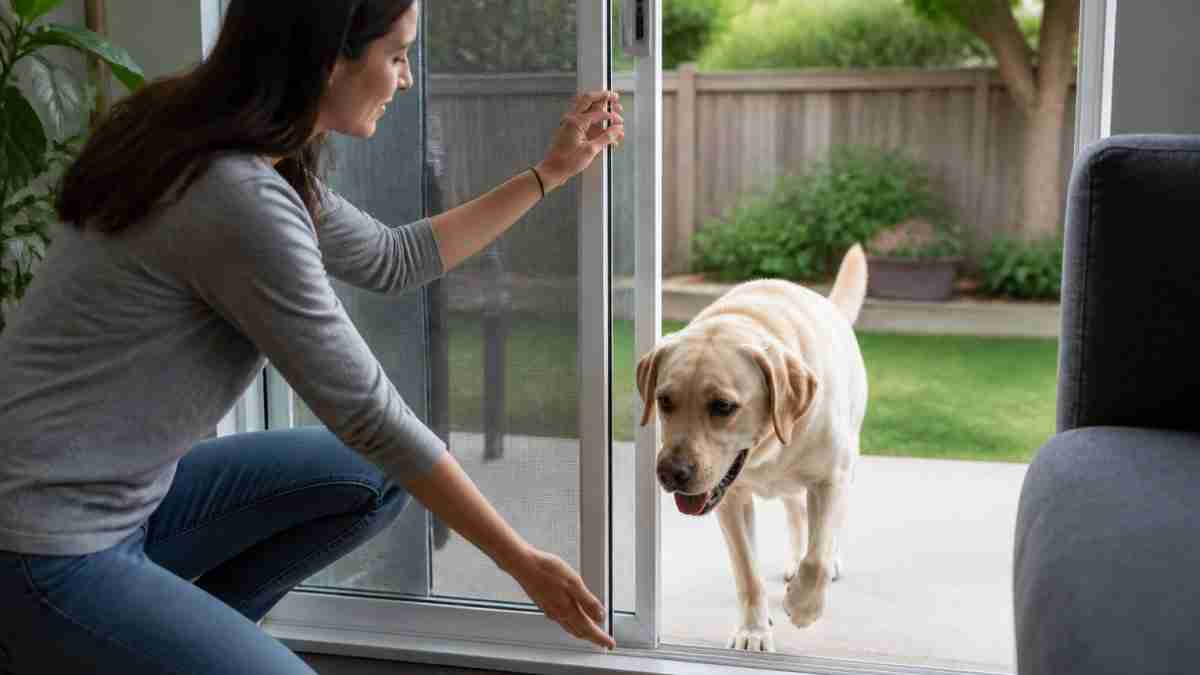
Hold the sliding screen door slightly open, just enough for your dog to see and smell outside.
When your dog gets close, hold the flap open wider so they can push through with minimal resistance, feeling the screen move and realizing it’s not solid.
Practice 5-10 times per session, letting your dog push through a little more each time. Reward heavily every time your dog makes contact with the screen.
Encouraging forward movement with positive reinforcement
After several sessions, release the screen slightly so your dog must use a bit more force, learning that a gentle push opens it.
Watch your dog’s body language. Signs of hesitation include:
- Stopping short of the screen
- Sniffing but not pushing
- Backing away
If you see hesitation, hold the screen more open. Some dogs take a week, others two; consistency matters far more than speed.
Praise and reward every attempt, even if your dog only touches the screen with their nose.
How to Dog Proof a Sliding Screen Door and Prevent Damage
Protecting your sliding screen door during training is essential. A damaged screen defeats the purpose and can injure your dog.
Choosing pet-resistant mesh and durable materials
Standard mesh tears easily under paws and claws. Learn more about pet-proof window screen mesh durability to understand which materials best withstand your dog’s activity level.
When selecting a sliding screen door for a pet household, look for:
- High-tensile strength mesh (resists punctures and tears)
- Reinforced frames that don’t flex under pressure
- Smooth edges that won’t catch on claws
Best Custom Screens offers custom-made sliding screen doors built with pet-resistant mesh and all-metal construction. These doors are fully assembled and ready to install, giving you the durability your dog needs.
Protecting screens during training and daily use
Even with pet-resistant mesh, take precautions during training:
- Supervise all training sessions
- Use a baby gate or barrier to prevent unsupervised access during early stages
- Avoid letting your dog run full-speed at the screen
Once your dog pushes through gently, damage risk drops significantly; most dogs naturally use minimal force once they understand the screen.
Never leave your dog unsupervised with a standard mesh screen door during training. A panicked dog can tear through quickly and injure themselves on sharp edges.
Teach Your Dog to Wait at the Door Before Passing Through
Teaching impulse control at the threshold prevents your dog from bolting outside unexpectedly and reduces the risk of escape or injury.
Building impulse control at the threshold
Once your dog pushes through independently, add a “wait” command.
Wait 2-3 seconds, then release with a word like “okay” or “through,” rewarding immediately when your dog passes.
Gradually increase the wait time to 5-10 seconds. This teaches your dog that the screen door is a controlled passage, not a free-for-all exit.
Practicing gradual sessions to reinforce the habit
Short, frequent sessions beat long, infrequent ones. Practice the wait command:
- 2-3 times per day
- For 5-10 minutes per session
- Over 2-3 weeks
Your dog should reliably wait for your signal before pushing through, preventing accidents and giving you control over outdoor access.
Stop Dog from Scratching Screen Door: Training and Prevention
Scratching is a natural dog behavior, but it damages screens and frustrates owners. Understanding why your dog scratches helps you redirect the behavior effectively.
Why dogs scratch and how to redirect the behavior
Dogs scratch screen doors to go outside, seek attention, burn boredom or energy, react to something outside, or from anxiety or stress.
The fix depends on the cause. If your dog wants outside, teach a calm approach and the push-through technique. If attention-seeking, ignore it completely, don’t scold or make eye contact.
Redirect scratching energy by:
- Providing outdoor time before they ask
- Using puzzle toys and enrichment activities
- Exercising your dog adequately before peak scratching times
Addressing hesitation and fear during training
Some dogs hesitate at the screen due to fear, not reluctance. Signs of fear include:
- Freezing near the doorway
- Whining or whimpering
- Refusing to approach the screen
If your dog shows fear, slow down and spend extra time with the door fully open, letting them investigate at their own pace. Never force a fearful dog through the screen, it reinforces fear and can cause lasting anxiety.
Use high-value treats and enthusiastic praise to build positive associations. Some dogs need 3-4 weeks just to feel comfortable approaching the screen. That’s normal and healthy.
A fearful dog needs patience more than anything else. Rushing creates setbacks. One extra week of slow introduction prevents months of anxiety-related problems later.
How to Train a Dog to Use a Doggie Door as an Alternative
If a sliding screen door doesn’t work for your situation, a standalone doggie door is another option. Best Custom Screens offers a Screen Door with Dog Door for Pet Owners that combines both solutions for easy pet access. The training process is similar but uses a different setup.
Comparing doggie doors to sliding screen door training
Doggie doors mount directly into a sliding screen or swinging door.
However, doggie doors require a separate installation step and may not fit all door types. Sliding screen door training gives your dog full access without additional hardware.
Best Custom Screens offers pet doors that mount onto sliding screen doors.
Adapting training for different dog sizes and ages
Training approach varies by dog characteristics:
Small dogs (under 15 lbs):
- May need a lower screen or smaller opening initially
- Use lower-value treats they can eat quickly
- Shorter training sessions (5-10 minutes) work better
Large dogs (over 50 lbs):
- Need stronger mesh to prevent accidental damage
- Benefit from more outdoor exercise before training
- Learn faster but need firm consistency
Senior dogs (7+ years):
- Learn well but need extra time
- May have mobility issues affecting approach
- Shorter, more frequent sessions prevent fatigue
Puppies (under 1 year):
- Learn quickly but forget easily
- Need very frequent repetition
- High energy means more accidents during training
| Dog Type | Session Length | Daily Frequency | Typical Timeline |
|---|---|---|---|
| Small breeds | 5-10 minutes | 3-4 times | 2-3 weeks |
| Large breeds | 10-15 minutes | 2-3 times | 2-4 weeks |
| Senior dogs | 5-10 minutes | 2-3 times | 3-5 weeks |
| Puppies | 5-10 minutes | 4-5 times | 2-3 weeks |
Common Mistakes to Avoid When Training
Learning what not to do prevents frustration and setbacks.
Moving too fast and overwhelming your dog
The biggest mistake is skipping the introduction phase and moving straight to pushing through. Your dog needs time to understand the screen is a passageway, not a barrier.
Signs you’re moving too fast:
- Your dog shows fear or avoidance
- Multiple failed attempts in a single session
- Your dog is panting or showing stress signals
If this happens, go back to the previous stage and spend more time there. A week spent building confidence prevents weeks of dealing with anxiety.
Inconsistent practice and supervision gaps
Dogs learn through repetition and consistency. Training 3-4 times daily for two weeks works better than training once a week for two months.
Inconsistency confuses your dog about what’s expected.
Supervision gaps during early training lead to:
- Accidental mesh damage
- Injury from sharp edges or improper pushing
- Your dog developing bad habits (running at the screen)
Always supervise training sessions and early independent use. Once your dog reliably uses the screen correctly, you can gradually reduce supervision.
Frequently Asked Questions
How long does it take to train a dog to use a sliding screen door?
Most dogs learn basic sliding screen door use within 2-4 weeks of consistent, short daily practice sessions. Younger dogs and those with prior door training may progress faster, while older or anxious dogs may need 6-8 weeks. The key is regular repetition and patience, rushing the process often leads to hesitation or fear. Practice for 5-10 minutes daily rather than long, infrequent sessions.
What’s the best way to stop a dog from scratching a screen door?
Redirect scratching behavior by teaching your dog to use positive reinforcement instead. When your dog approaches the screen door, guide them to push through gently rather than scratch. Use treats and praise to reward calm, controlled movement. Install pet-resistant mesh screens that withstand more pressure, and avoid leaving your dog unsupervised at the door during early training. Consistency prevents scratching from becoming a habit.
Can I train a dog to use a sliding screen door if they’re older or have mobility issues?
Yes, but adapt the training approach. Older or less mobile dogs benefit from shorter, gentler sessions with frequent breaks. Lower the flap height if possible, and use smaller, more frequent rewards. Some dogs with arthritis or joint problems may do better with a doggie door alternative that requires less physical effort. Always supervise closely and watch for signs of discomfort or fatigue during practice.
What should I do if my dog is afraid of the sliding screen door?
Take training slower and rebuild confidence gradually. Start by simply sitting near the open door with your dog, offering treats and praise for calm behavior. Let them approach at their own pace without pressure. Use positive reinforcement heavily, never force or punish hesitation. If fear persists, consult a professional trainer. Patience and consistent, low-pressure exposure over several weeks typically resolves door anxiety.