Fiberglass vs Aluminum Screen Mesh for High Wind Areas


Table of Contents
- Fiberglass Screen Mesh Pros and Cons
- Aluminum Window Screen Mesh Durability
- Best Screen Mesh for Windy Areas
- How Material Choice Affects Wind Resistance
- High-Wind Decision Guide by Exposure and Use Case
- Installation and Maintenance for Wind Durability
- Frequently Asked Questions
Last Updated: October 10, 2026
Fiberglass Screen Mesh Pros and Cons
Choosing between fiberglass and aluminum screen mesh for high wind areas requires understanding how each material performs under stress. Fiberglass screen mesh has dominated residential screening for decades, but its limitations in windy climates are significant. At Best Custom Screens, we help homeowners select the right fiberglass vs aluminum screen mesh for high wind areas based on their specific exposure and durability needs.
Fiberglass offers flexibility that some homeowners prefer. The material bends without cracking, making it forgiving during installation and minor impacts. However, this same flexibility becomes a liability in sustained wind. The mesh can billow and deform under pressure, losing its structural integrity over time.
Strength and Durability in Wind
Fiberglass screen mesh is substantially weaker than aluminum when subjected to wind loads. The material lacks rigidity, meaning it cannot resist sustained pressure the way a stiffer mesh can. In high wind areas, this translates to visible sagging within the first few years, even with proper installation. The fibers themselves don’t corrode, but UV exposure degrades the resin binding them together, accelerating failure in coastal or sun-exposed locations.
Durability in wind depends heavily on frame support and fastener quality. A fiberglass screen mesh stretched too loosely will fail faster. Conversely, over-tightening creates stress points that tear prematurely. The material’s inability to handle variable wind pressure makes it unsuitable for regions with frequent storms or sustained gusts above 40 mph.
Visibility and Airflow
Fiberglass excels at visibility and airflow compared to heavier aluminum options. The mesh weave is more open, allowing better light transmission and air circulation. For homeowners prioritizing fresh air and unobstructed views, fiberglass delivers. The trade-off is wind performance, that openness means less resistance to pressure.
Fiberglass mesh typically offers 80-85% visibility, making it nearly transparent from indoors. Airflow remains excellent because the material creates minimal obstruction. In mild climates or sheltered locations, these benefits justify the material choice. In high wind areas, however, the visibility advantage becomes irrelevant if the screen fails within a few seasons.
Aluminum Window Screen Mesh Durability
Aluminum window screen mesh represents the opposite end of the durability spectrum. The material is rigid, strong, and engineered specifically for demanding environments. When fiberglass vs aluminum screen mesh is evaluated for high wind areas, aluminum consistently outperforms in structural integrity and longevity.
The rigidity of aluminum means it resists wind pressure without deforming. The mesh maintains its shape and tension under sustained gusts, preventing the billowing that compromises fiberglass screens. This structural advantage directly translates to longer lifespan and better performance in coastal zones, hurricane-prone regions, and areas with frequent severe weather.
Resistance to Denting and Damage
Aluminum’s hardness is both an asset and a limitation. The material resists denting far better than fiberglass, holding its shape through minor impacts and wind stress. However, aluminum can dent if struck with sufficient force, creating visible damage that fiberglass would simply flex to absorb. For homes with active pets or high-traffic areas, this distinction matters.
The rigidity that makes aluminum strong in wind also makes it less forgiving during installation. Improper handling can crease or bend the mesh permanently. Professional installation becomes more important with aluminum. Once properly installed, aluminum screens resist deformation from wind, pressure, and minor impacts for years.
Corrosion and Weather Resistance
Aluminum naturally resists corrosion through oxidation, forming a protective oxide layer. In coastal environments with salt spray, this resistance is critical. Fiberglass is impervious to rust, but the resin binding the fibers degrades under salt exposure. Aluminum’s corrosion resistance actually improves with proper maintenance, making it the superior choice for salt-laden air.
Weather resistance extends beyond salt spray. UV exposure, temperature cycling, and humidity fluctuations all degrade fiberglass resin over time. Aluminum maintains its structural properties across temperature extremes and prolonged sun exposure. In high wind coastal areas, the combination of salt spray, UV intensity, and wind pressure makes aluminum the more reliable long-term investment.
Best Screen Mesh for Windy Areas
The best screen mesh for windy areas depends on specific exposure conditions and wind load expectations. Aluminum outperforms fiberglass in sustained wind, but the choice involves trade-offs between durability, visibility, and installation complexity. Understanding wind load performance standards clarifies which material suits your situation.
Wind Load Performance and Standards
Wind load testing follows ASTM standards that measure how much pressure a mesh can withstand before failure. Aluminum screens typically handle 60-80 pounds per square foot of wind pressure without permanent deformation. Fiberglass screens begin showing permanent deformation at 30-40 pounds per square foot.
Standards like ASTM E330 test window assemblies under simulated wind loads. When tested as part of a complete screen assembly, aluminum performs significantly better than fiberglass. The mesh, frame, and fasteners work together to resist pressure. Aluminum’s rigidity means the entire assembly maintains integrity longer under stress.
Real-world wind speeds in high-exposure areas often exceed 50 mph, generating substantial pressure on screens. A Category 3 hurricane produces sustained winds of 111-129 mph, creating forces that exceed what fiberglass can withstand.
Frame, Fasteners, and Installation Impact
The mesh material alone doesn’t determine wind resistance. The frame, fasteners, and installation method contribute equally to overall performance. A premium aluminum mesh installed poorly will fail faster than a quality fiberglass screen in an ideal installation. Best Custom Screens uses heavy-duty all-metal construction options.
Fastener quality directly affects wind performance. Corrosion-resistant fasteners prevent frame deterioration that compromises mesh tension. Proper spacing and tightness ensure even pressure distribution across the mesh. Over-tightening creates stress concentration; under-tightening allows movement and eventual failure. Installation precision matters more with aluminum because the rigid mesh transfers all pressure directly to the frame and fasteners.
How Material Choice Affects Wind Resistance
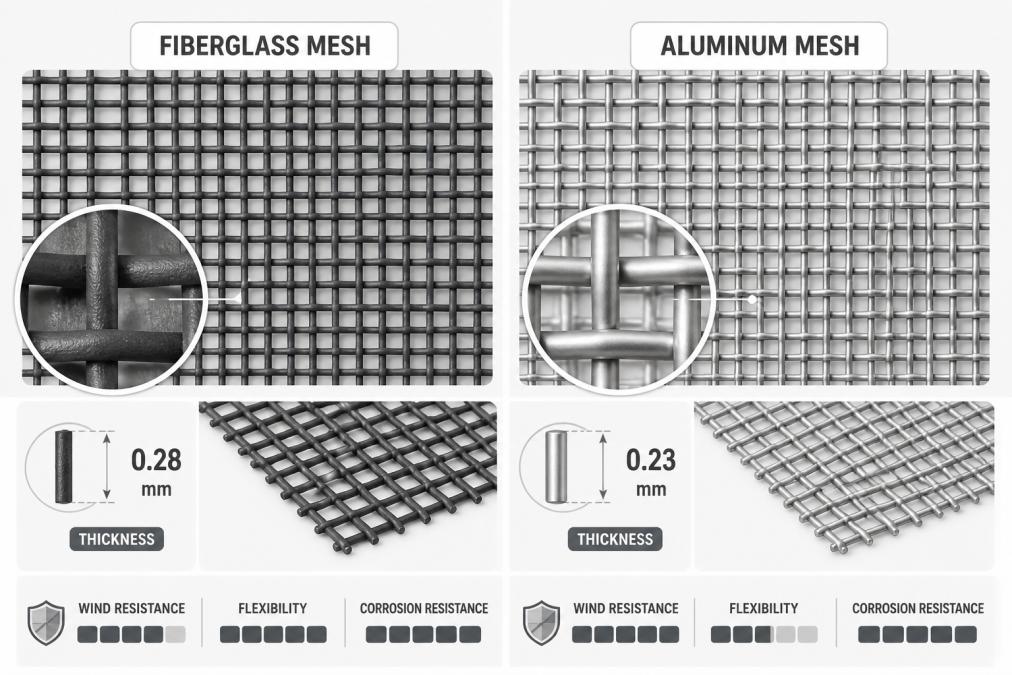
The material you choose directly determines how your screen performs under wind pressure. Fiberglass absorbs energy by flexing, which works until the flex becomes permanent deformation. Aluminum resists deformation, maintaining tension and structural integrity. This fundamental difference shapes long-term durability in high wind areas.
Mesh Openness and Wind Pressure
Wind pressure increases dramatically with mesh openness. A more open weave allows wind to pass through with less resistance, reducing pressure on the mesh itself but also reducing visibility. A tighter weave creates more resistance, increasing pressure on the material and frame.
The relationship between mesh openness and wind performance is non-linear. Doubling the wind speed quadruples the pressure. A screen designed for 30 mph winds will experience four times the pressure at 60 mph. Fiberglass’s flexibility becomes a liability at these higher pressures because the mesh cannot maintain its position.
Visibility trade-offs exist between materials. Fiberglass offers 80-85% visibility; aluminum typically provides 70-75% due to thicker frame requirements needed for rigidity. In high wind areas, the reduced visibility is acceptable because the screen lasts significantly longer. A screen that fails after three years provides no visibility benefit regardless of initial clarity.
Failure Modes and Repairability
Fiberglass screens fail by tearing, typically starting at stress points where the mesh attaches to the frame. Once a tear begins, it propagates rapidly, especially under wind pressure. Repairing fiberglass requires replacing the entire mesh because patches are unreliable. The material’s flexibility means patches don’t hold securely.
Aluminum screens fail differently. The mesh can dent or crease but rarely tears unless struck directly. Fasteners can loosen from wind vibration, allowing the mesh to lose tension. This failure mode is repairable, re-tightening fasteners restores function. Aluminum mesh can be patched successfully because the rigid material holds patches securely.
Repairability favors aluminum in high wind areas. A homeowner can often restore function by tightening fasteners or applying a patch. Fiberglass failures typically require complete replacement. Over a 10-year period, aluminum’s repairability often offsets its higher initial cost.
High-Wind Decision Guide by Exposure and Use Case
Your specific location and exposure level should drive the material choice. Coastal homes, hilltop properties, and areas with frequent severe weather demand aluminum. Sheltered suburban locations might accommodate fiberglass. Understanding your exposure helps clarify which fiberglass vs aluminum screen mesh for high wind areas makes sense for your home.
Coastal and Hurricane Zone Screening
Coastal properties face salt spray, UV intensity, and frequent high winds, conditions where aluminum excels. Salt corrodes fiberglass resin, shortening lifespan to 3-5 years in some coastal areas. Aluminum’s oxide layer provides inherent salt resistance, extending lifespan to 10+ years with proper maintenance.
Hurricane-prone regions often mandate impact-resistant windows and doors. Screens aren’t always required to meet the same standards, but homeowners in these areas benefit from screens that can withstand the same forces. Aluminum screens paired with quality frames and fasteners provide this resilience. When hurricane season arrives, your screens won’t become projectiles or fail catastrophically.
Coastal homeowners should prioritize corrosion-resistant fasteners and frames alongside aluminum mesh. The complete assembly must resist salt spray, not just the mesh. Best Custom Screens provides high-quality, custom-made window screens, sliding screen doors, and swinging screen doors designed to enhance your home’s comfort and security.
Seasonal and Temporary Installations
Seasonal installations allow more flexibility in material choice. If you install screens only during summer months and remove them for winter, fiberglass becomes more viable. The reduced exposure time means UV degradation and wind stress accumulate more slowly. Temporary installations also allow you to prioritize visibility and airflow over maximum wind resistance.
Vacation homes or seasonal residences in mild climates can use fiberglass successfully. The material’s superior visibility and airflow make it appealing for temporary use. However, even seasonal installations in windy areas benefit from aluminum. A single severe storm during your stay could damage fiberglass screens severely. Aluminum provides peace of mind regardless of seasonal weather patterns.
Whether you choose fiberglass or aluminum, proper installation and maintenance extend lifespan significantly. Seasonal users should still prioritize quality construction and corrosion-resistant fasteners.
| Material | Wind Resistance | Durability | Visibility | Repairability | Best Use Case |
|---|---|---|---|---|---|
| Fiberglass | Moderate (30-40 psi) | 3-7 years | Excellent (80-85%) | Poor (requires replacement) | Sheltered locations, seasonal use |
| Aluminum | High (60-80 psi) | 10+ years | Good (70-75%) | Excellent (adjustable, patchable) | Coastal areas, high wind zones, year-round |
Installation and Maintenance for Wind Durability
Proper installation determines whether your chosen material performs as designed. Improper installation can compromise even premium aluminum screens. Maintenance extends lifespan and preserves wind resistance across seasons. Best Custom Screens ships fully assembled screens.
Installation tension is critical for both materials. The mesh must be tight enough to resist wind pressure but not so tight that stress concentrates at attachment points. Professional installation or factory assembly ensures correct tension.
Maintenance involves annual inspection of fasteners, frame condition, and mesh integrity. Tighten any loose fasteners before high wind season. Clean mesh and frames to remove salt spray residue or debris that accelerates corrosion.
Aluminum screens require less maintenance than fiberglass but benefit from the same attention. Check fasteners annually, especially after severe weather. Inspect for corrosion around fastener holes in coastal areas. Address any issues promptly before they compromise the entire screen.
Choosing the right screen mesh for high wind areas protects your home while providing years of reliable performance. Best Custom Screens manufactures fully assembled, custom-sized screens using heavy-duty aluminum construction and corrosion-resistant fasteners, ensuring your screens withstand high wind exposure without compromising function.
Frequently Asked Questions
How does fiberglass screen mesh compare with aluminum in high winds?
Fiberglass is flexible, making it suitable for moderate wind areas. Aluminum is rigid and stronger but can dent or crease under wind force.
Which screen mesh is less likely to tear or bend in strong wind?
Aluminum screen mesh resists bending better than fiberglass due to its rigidity. The best screen mesh for windy areas depends on your exposure: aluminum for dent resistance in moderate winds, fiberglass for tear resistance in turbulent conditions.
Does aluminum screen mesh dent or crease easily?
Yes, aluminum dents more readily than fiberglass because it is rigid. Even moderate impacts or wind pressure can create permanent creases. For durability in high-traffic or high-wind areas, consider the trade-off: aluminum’s strength versus fiberglass’s flexibility and damage recovery.
What should I check on my screens after strong winds?
Inspect the mesh for tears, holes, or loose fibers. Check that the mesh is still seated firmly in the frame spline (the rubber cord holding it in place). Look for bent frames, loose fasteners, or separation at corners. Test the frame for square alignment by measuring diagonals. If the mesh has pulled away from the spline or the frame is bent, the screen needs repair or replacement. Regular checks after storms prevent insects and pests from entering through damage.