Do Security Screens Block Natural Light? What to Know

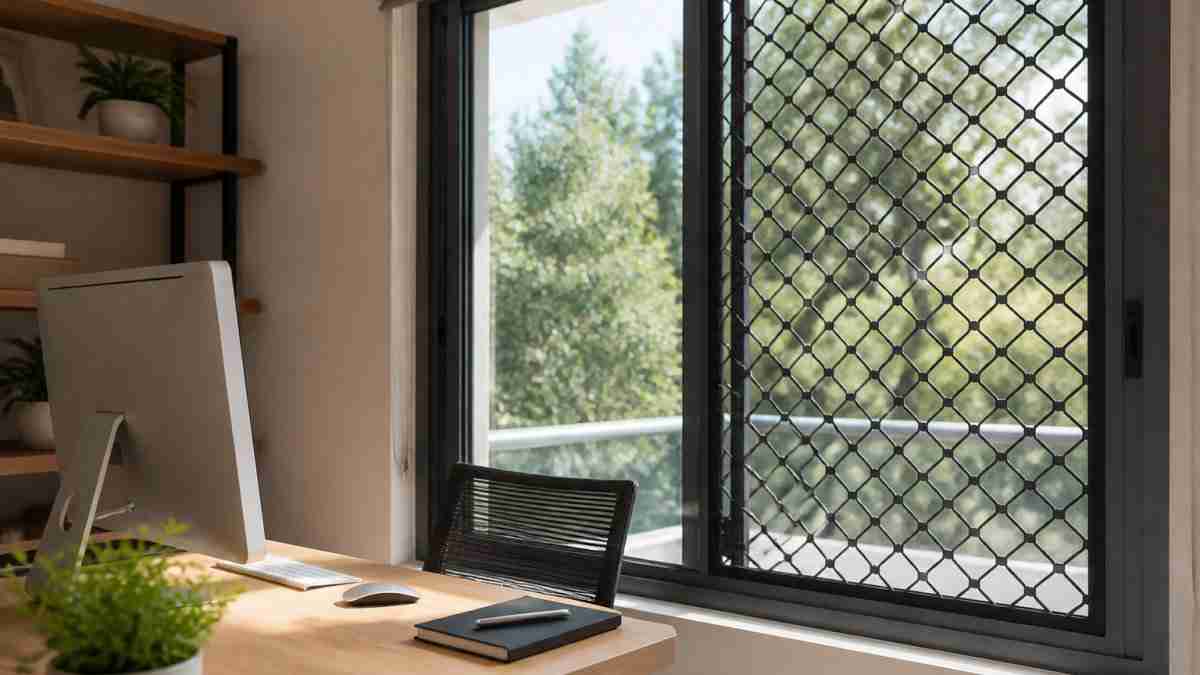
Table of Contents
- Do Security Screens Block Natural Light? The Short Answer
- How Security Screens vs Regular Window Screens Differ in Light and Protection
- The Best Security Screen Mesh for Natural Light: Weave, Density, and Color
- Mesh Aperture and Weave: How They Affect Brightness
- Light Transmission by Mesh Type: What the Numbers Actually Look Like
- Color and Coating: Why Black Mesh Often Looks Brighter
- How Density, Coating, and Color Stack Up
- Security Screens vs Solar Screens for Glare and Heat
- A Simple Way to Assess Light Before You Buy
- Security Screens and Airflow: Does Mesh Stop the Breeze?
- Security Screens UV Protection: Blocking Rays Without Blocking the View
- Security Screens vs Solar Screens: When Glare and Heat Matter More Than Light
- Room-by-Room Guide: Matching Mesh to Light and Security Needs
- Conclusion: Choosing Security Screens That Balance Light, Safety, and Comfort
- Frequently Asked Questions
Last Updated: October 12, 2026
Do Security Screens Block Natural Light? The Short Answer
Security screens do not block natural light, they filter it. A typical security mesh lets through most daylight, so a screened room stays bright.
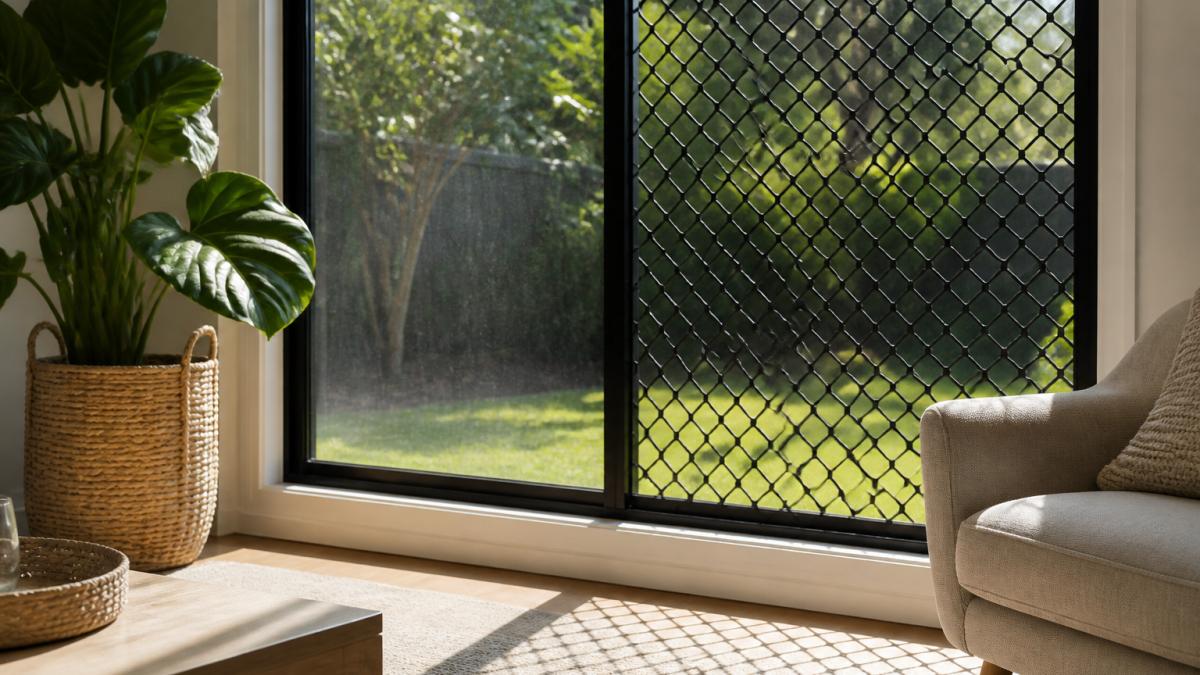
The real question is how much light gets through and how the mesh changes the way a room feels.
Below, we break down how each factor changes the light in your home, plus airflow, UV protection, and how security screens compare to solar screens.
How Security Screens vs Regular Window Screens Differ in Light and Protection
A regular window screen keeps bugs out while letting air in. A security screen does that and resists forced entry.
That extra job changes the materials. Regular insect screens use thin fiberglass or aluminum mesh that tears easily; security screens use heavier mesh, often stainless steel, in a reinforced frame.
The effect on light is less than you would think.
The trade-off is worth it for many homes. You get:
- Insect protection that holds up over time
- A physical barrier at doors and windows
- Better durability against pets and weather
Regular screens are cheaper and lighter, but offer almost no security. For light and protection together, security mesh is the better pick.
Security screens filter light rather than block it. The density of the mesh matters more than the fact that it is a security product.
The Best Security Screen Mesh for Natural Light: Weave, Density, and Color
The best security screen mesh for natural light balances three things: open weave, moderate density, and dark color. Get those right and your room stays bright while staying secure. Two screens with the same frame can look completely different inside based on the mesh alone.
Mesh Aperture and Weave: How They Affect Brightness
Mesh aperture is the size of the openings in the weave. Larger openings mean more light and airflow; smaller openings mean more privacy and strength.
A plain weave, threads over and under in a simple grid, is most common and lets light through evenly. A twill weave packs threads tighter, adding strength but cutting light.
The practical rule: the finer the mesh, the more light it blocks.
Light Transmission by Mesh Type: What the Numbers Actually Look Like
Manufacturers rarely publish a single “light transmission” figure for security mesh, because it depends on thread diameter, weave pattern, and coating.
A common pattern across the industry:
- Standard insect mesh (18×16 fiberglass or aluminum): open area typically lands in the mid-70% range. Very little daylight is lost.
- Standard security mesh (18×14 stainless, ~0.011 in. wire): open area commonly falls in the 60-70% range. Most people read this as “slightly softer view,” not “darker room.”
- High-security / fine mesh (20×20 or 16×16 with heavier wire): open area can drop into the 50-60% range. At this point, a side-by-side comparison in the same window is noticeable, especially on overcast days.
A useful mental model: open area is roughly the fraction of daylight that gets past the mesh. A 65% open-area screen does not mean the room is 65% as bright, glass, window treatments, and room surfaces all play a role, but the mesh is rarely the dominant limiter.
Color and Coating: Why Black Mesh Often Looks Brighter
Black mesh often looks brighter from inside than silver or gray mesh, and the reason is contrast. Dark mesh absorbs light instead of reflecting it, reducing glare and making the view outside feel clearer; lighter mesh reflects light back, washing out the view and making the room feel dimmer. Coating matters too: matte cuts reflection, while shiny bounces light around.
How Density, Coating, and Color Stack Up
No single factor decides brightness. They compound:
| Mesh Factor | Effect on Light | Best For |
|---|---|---|
| Open weave (18×14) | More light, more airflow | Living rooms, patios |
| Tight weave (20×20) | Less light, more privacy | Bedrooms, street-facing windows |
| Black mesh | Less glare, clearer view | Most rooms |
| Silver/gray mesh | More reflection, dimmer feel | Utility areas |
| Matte coating | Less bounce, truer color | Rooms where view clarity matters |
| Glossy coating | More internal reflection | Rarely preferred indoors |
A dark, matte, moderately open mesh is the combination most homeowners land on when daylight and view quality both matter; a light, glossy, tight mesh most often produces the “why does this room feel dimmer?” complaint.
Security Screens vs Solar Screens for Glare and Heat
It helps to separate three products that are often confused:
- Insect mesh, thin, open, minimal light loss, no security value.
- Security mesh, heavier wire, moderate open area, forced-entry resistance, modest UV and glare reduction.
- Solar screen fabric, dense woven or knitted fabric designed to block a large share of solar heat gain and glare. It darkens a room noticeably more than security mesh.
For heat and glare, a solar screen is the right tool. For security with daylight preserved, security mesh is. If you have both problems, the common pattern is solar fabric on the hottest west- and south-facing openings and security mesh everywhere else.
A Simple Way to Assess Light Before You Buy
You do not need a light meter. A short sample test answers most of the question:
- Ask for a physical sample of the exact mesh, not a photo or paper swatch card.
- Hold it in the actual opening at the time of day you use the room most, morning for east-facing, late afternoon for west-facing.
- Step back to your normal seating position and look through the sample, not at it.
- Compare two samples side by side in the same opening, open versus tight weave, or black versus silver. Differences invisible alone become obvious together.
- Check it on an overcast day too. Mesh that feels invisible in direct sun can feel heavier under flat light.
- Look at the view, not just the brightness. A slightly darker room with a clear view often feels better than a brighter room with a milky view.
A fifteen-minute test in the real opening beats any specification sheet.
Open area, weave, color, and coating compound. A dark, matte, moderately open mesh preserves daylight best, and a sample held in the actual opening is the only test that matters.
Security Screens and Airflow: Does Mesh Stop the Breeze?
Security screens and airflow work together better than most people expect.
The key is mesh density: a tighter weave restricts airflow more than an open one, so if cross-ventilation matters, choose a more open mesh for the windows you open most.
In hot climates, airflow and shade work as a team: a screen that lets air through while cutting direct sun keeps rooms cooler without relying on the AC.
- Open mesh: best airflow, good for porches and patios
- Medium mesh: balanced airflow and strength
- Tight mesh: less airflow, more privacy and security
Security Screens UV Protection: Blocking Rays Without Blocking the View
Security screens UV protection is one of their most underrated benefits. The mesh blocks a share of harmful UV rays while still letting visible light through, meaning less fading on furniture, floors, and artwork.
UV rays fade wood, crack leather, and dull fabric over time, and a screen acts as a first line of defense. Denser weaves and darker colors block more, so you keep the view and lose the worst of the sun’s punch, especially on west- and south-facing windows, which take the hardest hit.
If fading furniture is your main worry, pair a tighter security mesh with curtains you close during peak afternoon sun. The mesh handles the daily load; the curtains handle the worst hours.
Security Screens vs Solar Screens: When Glare and Heat Matter More Than Light
Security screens and solar screens solve different problems: a security screen stops intruders and pests, while a solar screen cuts glare and heat. Some homeowners need both.
Solar screens use a denser fabric that blocks a large share of the sun’s heat and light, great for rooms that get too hot or too bright, but they darken a room more than a security screen does.
Which do you pick? It depends on the room:
- Too hot and too bright: solar screen
- Bright but you want security: security screen
- Both problems: solar screen on the hottest windows, security mesh elsewhere
Some window and door systems let you combine the two, giving you heat control where you need it and clear light where you do not.
Room-by-Room Guide: Matching Mesh to Light and Security Needs
No single mesh fits every room. The right choice depends on how you use the space, which way it faces, and when you occupy it, the same mesh reads differently depending on orientation and time of day.
Orientation Comes First
Before you pick a mesh, note which direction the opening faces:
- North-facing: Indirect light all day. Rooms here can take a tighter, darker mesh without feeling dim, because there is no direct sun to lose. Privacy is often the bigger concern.
- East-facing: Strong morning sun, softer afternoon. A moderately open mesh preserves the morning brightness; a tighter mesh tames the early glare if the room is a bedroom.
- South-facing: Bright most of the day in most of the country. Open weave keeps the room feeling light; a tighter mesh starts to register as a real reduction.
A shaded opening, under a porch roof, behind a tree, or on a recessed wall, behaves more like a north-facing window than its compass direction suggests. Shade reduces the light budget before the mesh ever gets involved.
Room-by-Room
- Living room: Open weave, black matte mesh keeps the space bright and the view clear. If it faces west, consider a slightly tighter weave or solar fabric on just the worst window.
- Bedroom: Tighter weave for privacy; slightly less light is usually welcome, especially on east-facing windows.
- Kitchen: Medium mesh balances airflow for cooking odors and daily light. South- and west-facing kitchen windows benefit from a darker mesh to cut afternoon glare on countertops.
Time of Day and Season Matter
A mesh that feels invisible at noon can feel heavy at dusk. Two patterns are worth planning around:
- Morning rooms (east-facing kitchens, breakfast nooks) want light. Favor open weave.
- Evening rooms (west-facing living rooms, dining rooms) want shade and glare control. Favor tighter weave or solar fabric.
- Winter versus summer: Low winter sun angles under a porch roof or eave can reach deeper into a room than high summer sun. A screen that seems unnecessary in July may be doing real work in January.
A Quick Decision Path
- Identify the orientation and whether the opening is shaded.
- Identify when you use the room most.
- Pick the most open mesh that still meets your privacy and security needs for that opening.
- Test a sample in the actual opening at the time of day that matters.
- Adjust per opening, it is fine to run different meshes on different windows in the same house.
If you are not sure where to start, match the mesh to the light you actually want, not to a single house-wide rule: morning rooms want light, evening rooms may want shade.
It is normal, and often better, to mix mesh types across a home. The same security screen line usually comes in multiple weave densities, so you can keep the frame and hardware consistent while tuning daylight room by room.
Conclusion: Choosing Security Screens That Balance Light, Safety, and Comfort
The fear that security screens turn a bright home dark is mostly a myth. The right mesh keeps rooms bright, cuts glare, and adds protection regular screens cannot match.
At Best Custom Screens, we build fully assembled, custom-fit screens shipped nationwide. Our heavy-duty, all-metal options stand up to pets and weather, and our solar and pet-friendly lines cover every room.
Frequently Asked Questions
Do security screens block natural light?
Security screens filter natural light but do not block it entirely. The amount of light that passes through depends on mesh density, weave, and color. A standard 18×14 mesh screen might reduce visible light by 15-25%, while a tighter 18×18 mesh can block 30-40%. Black or charcoal mesh tends to let more light through than silver or white because it absorbs less glare and creates less reflection. Overall, most homes still receive plenty of daylight with security screens installed.
Will security screens make a room darker?
They can slightly reduce brightness, but the effect is usually minor. Darker mesh colors like black or charcoal actually improve outward visibility and can make a room feel brighter because they reduce glare. If you choose a very dense mesh or a dark solar screen, the room may feel dimmer, especially on north-facing windows. For most living spaces, a standard security mesh keeps the room comfortably lit while adding security and insect protection.
Do security screens affect airflow?
Security screens and airflow work together well. The open weave of most security mesh allows fresh air to pass through, though denser meshes may slightly reduce breeze strength. A typical 18×14 mesh has about 70% open area, so ventilation remains strong. If maximum airflow is your priority, choose a more open weave and avoid layering screens with storm windows or heavy solar shades. Regular cleaning also helps maintain airflow by preventing dust from clogging the mesh.
Which security screen mesh lets in the most light?
The best security screen mesh for natural light is usually a black or charcoal stainless steel mesh with a standard 18×14 weave. The dark color reduces glare and reflection, making it easier to see out and letting more perceived light in. Finer meshes like 18×18 or 20×20 block more light, while larger apertures like 14×14 allow more light but may offer less insect protection. If you want a balance of security, visibility, and brightness, a black 18×14 stainless steel mesh is a solid choice.